
Stainless Bollard Styles: Fixed, Removable and Yellow-Black
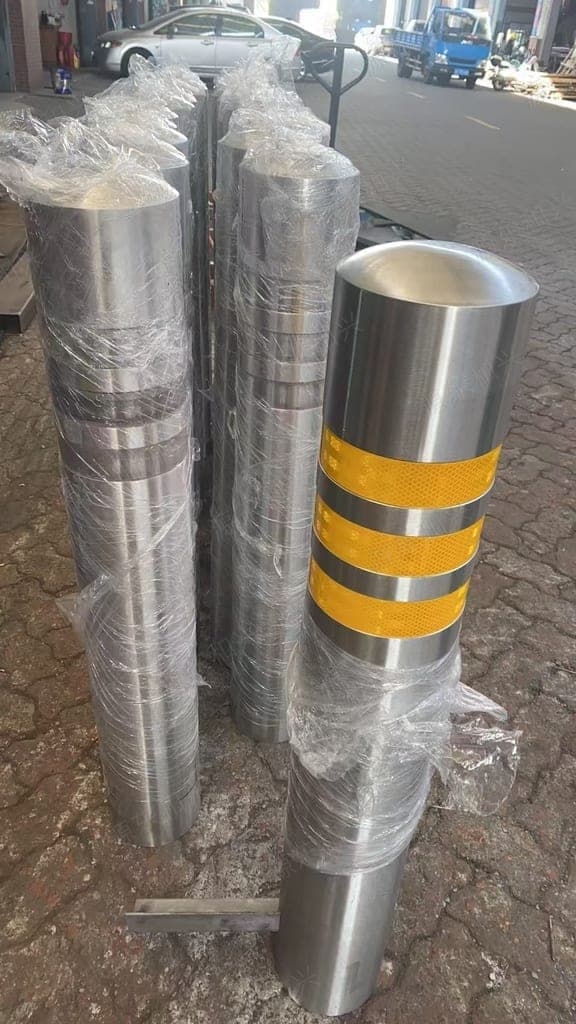
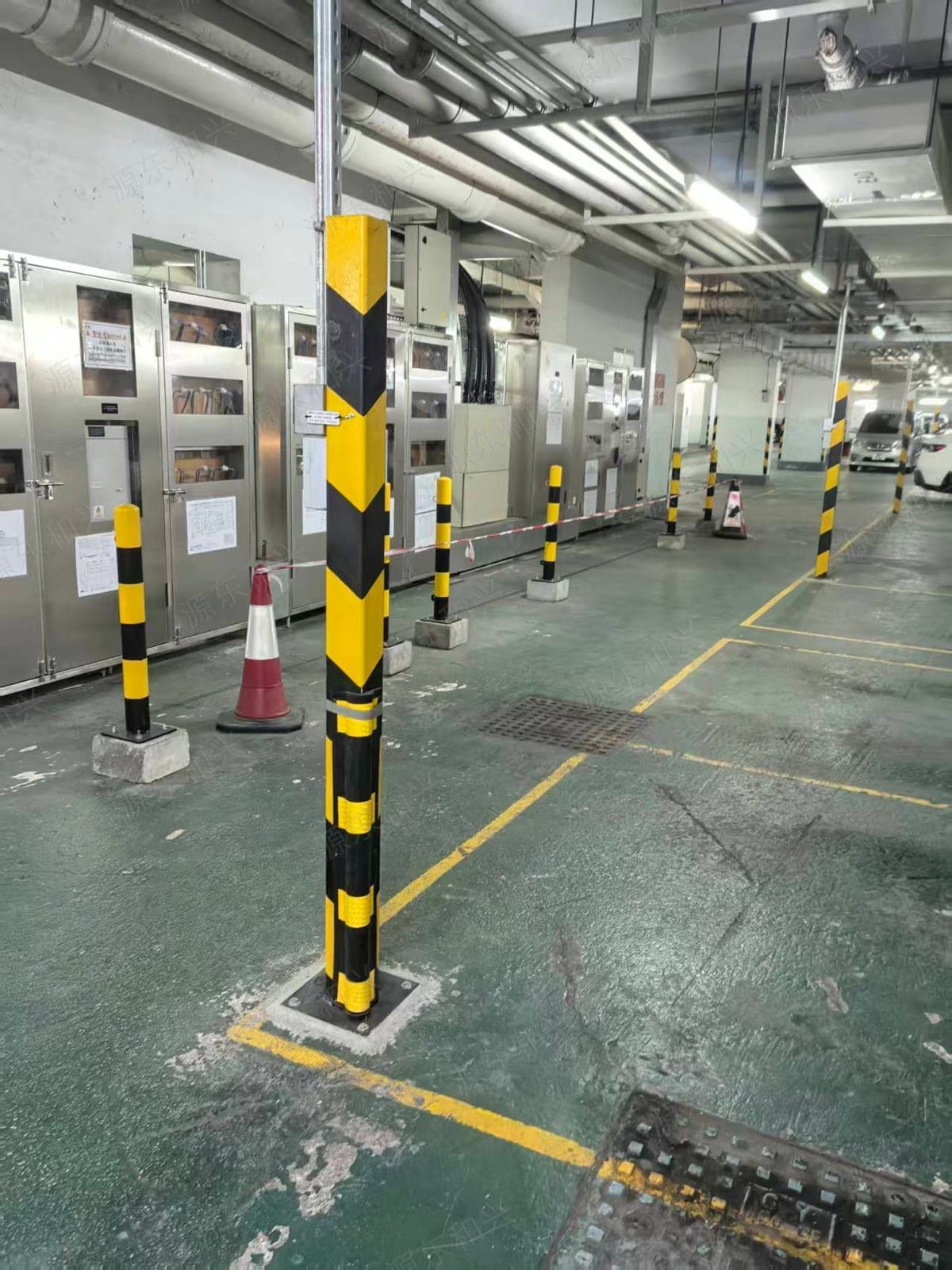
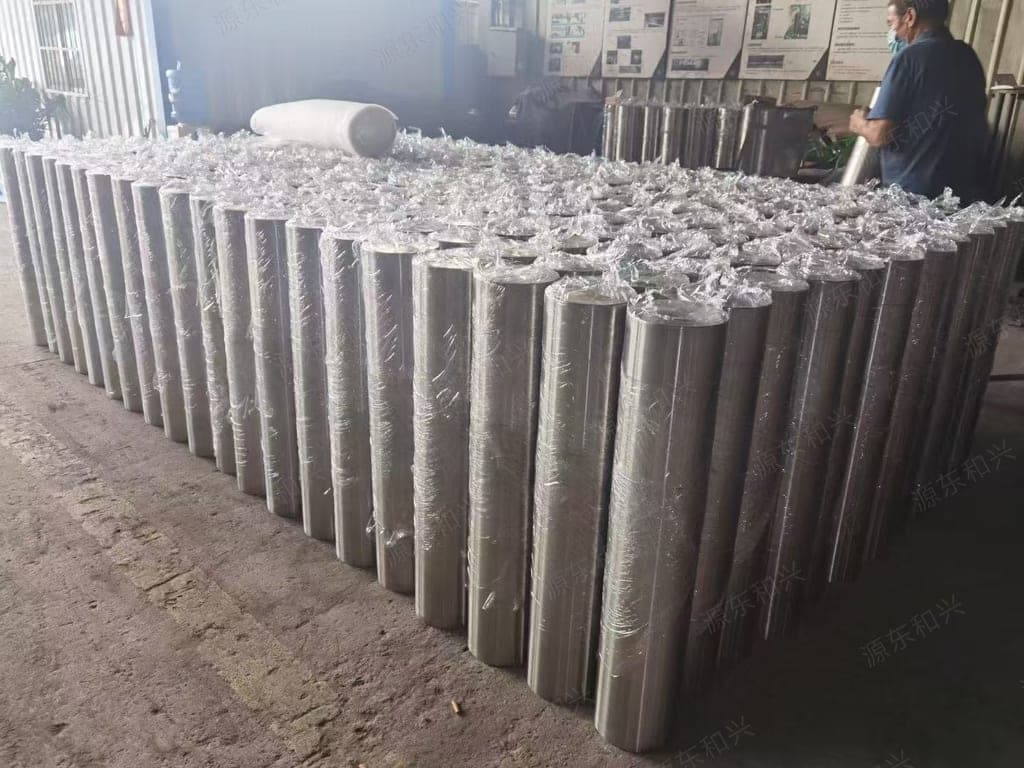
On our drawings they are called vehicle stop posts; everyone else calls them bollards. The regular styles come down to a handful: plain tube on a flange, ring-grooved posts with reflective film, yellow-black striped posts, and removable posts you pull out to let traffic through. This gallery pairs each style with a picture — three cut-out product shots of real posts, six real photos from the workshop and the sites.
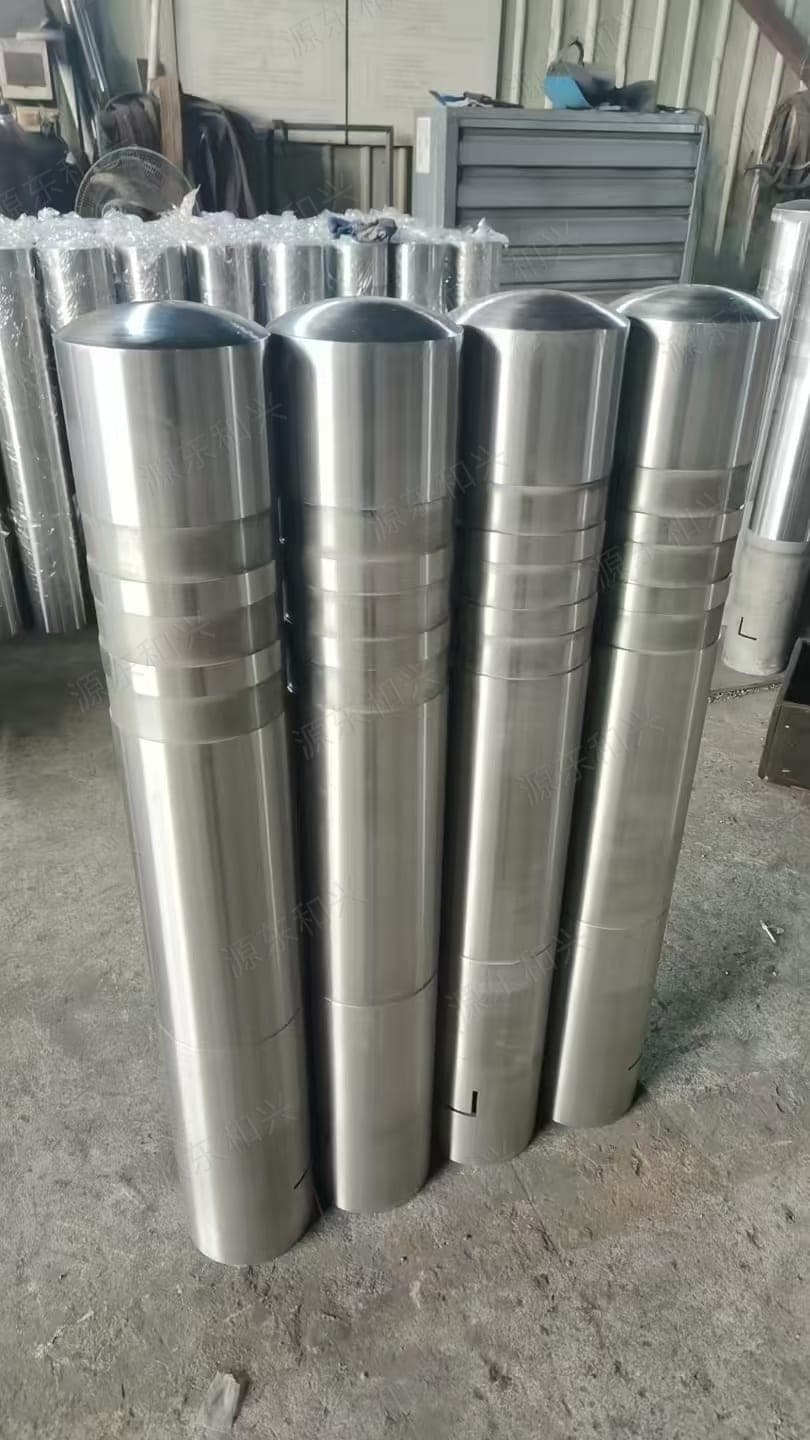
First the names: bollards, posts and "vehicle stop posts" are the same thing
On site people call them bollards, posts or separator posts; our shop drawings title them "vehicle stop posts". Same family: steel-tube posts standing where pedestrians and vehicles fight for the same strip of ground. This gallery covers the regular styles; special ones can be tooled to order.
Style overview (real posts, cut out and laid out)
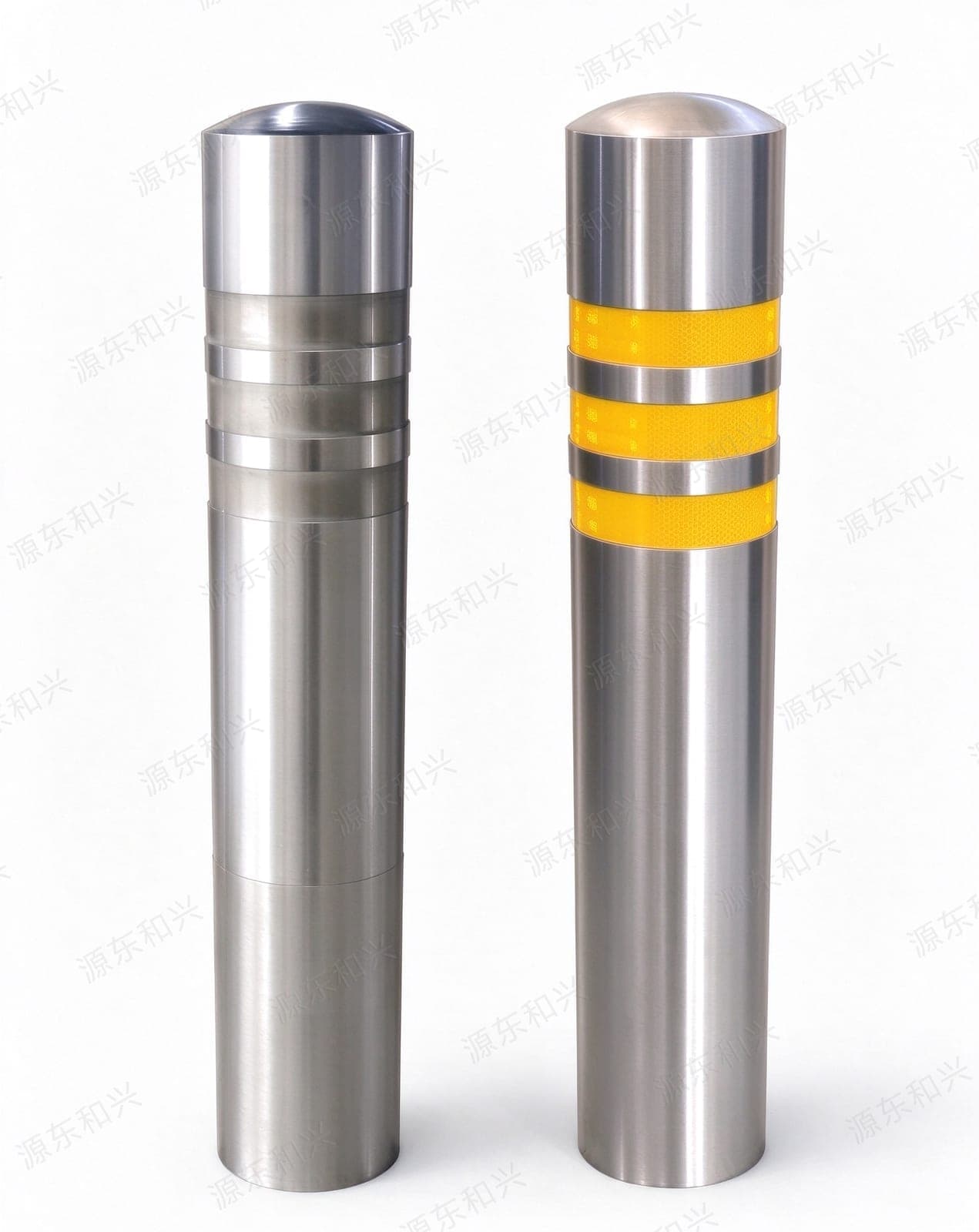
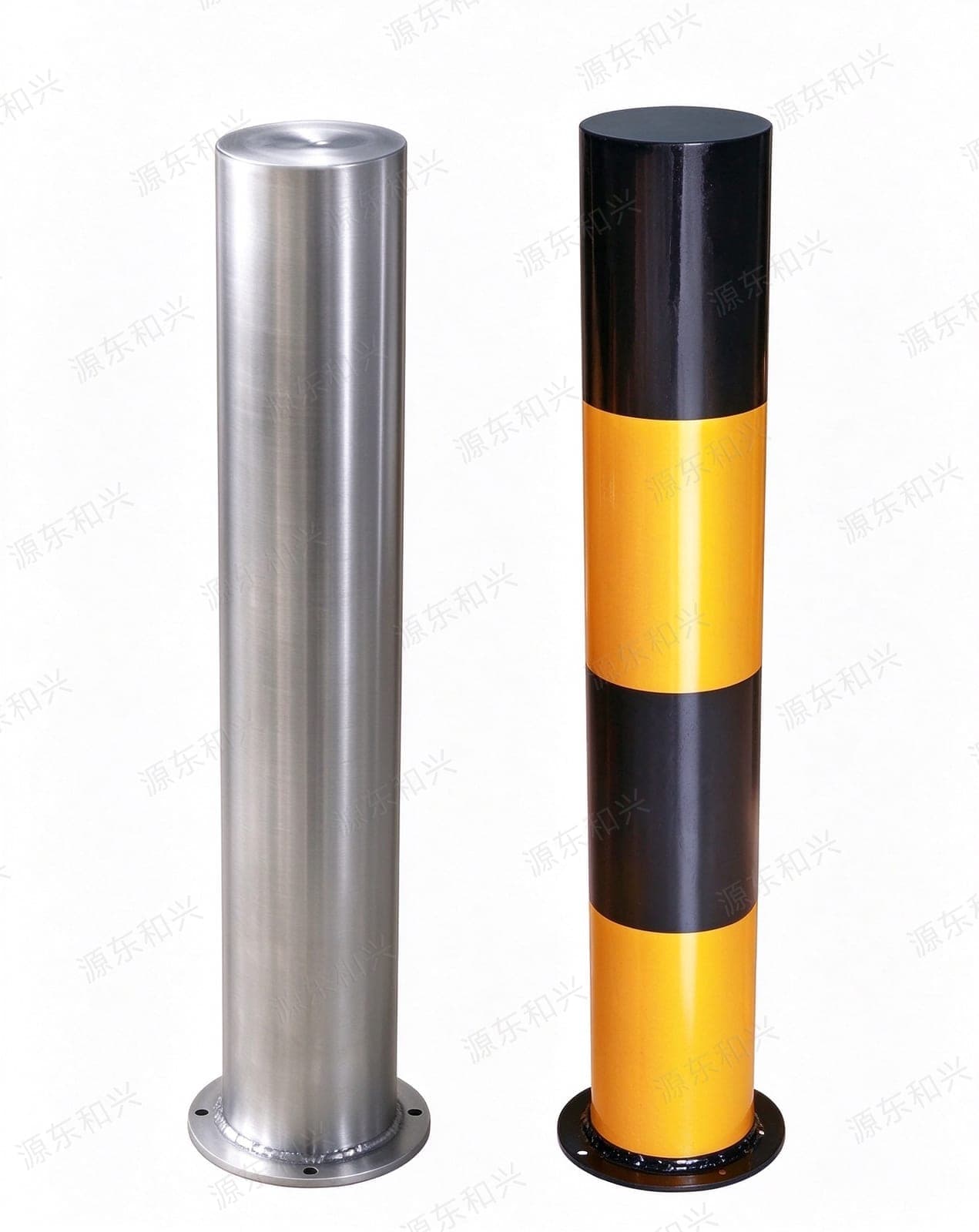
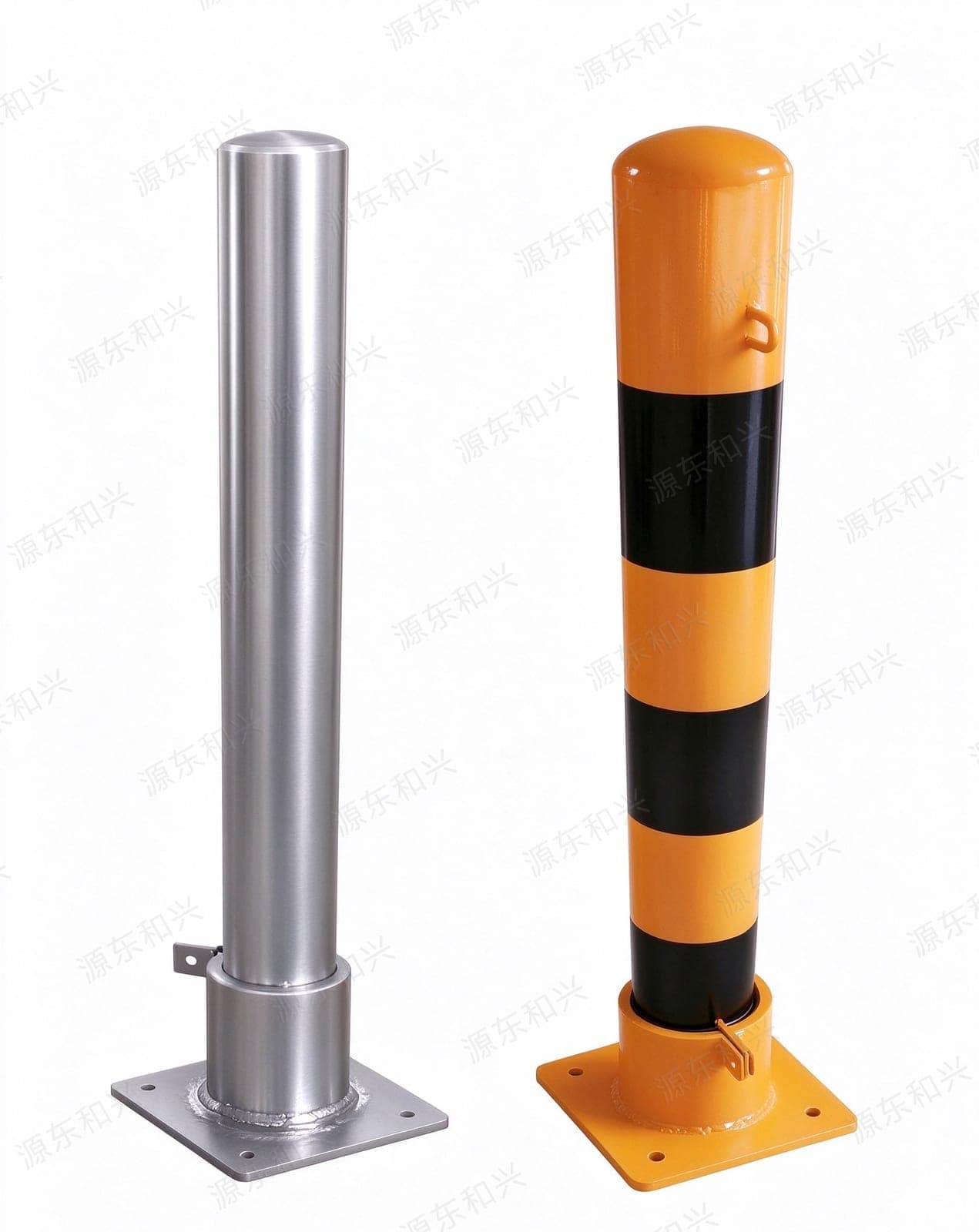
Fixed or removable: does traffic need to get through?
| Style | How to spot it | How it is fitted | Where you see them |
|---|---|---|---|
| Plain fixed | Straight tube on a bolt-hole flange base | Anchor-bolted to the floor, or set in concrete | Shop fronts, parking bays |
| Ring-groove with film | Turned ring grooves; film sits flush with the tube | Set in concrete, tube cavity grouted | Main drives, zebra crossings |
| Yellow-black striped | Alternating yellow and black bands | Both flanged and in-ground versions | Basement parks, ramps, lane mouths |
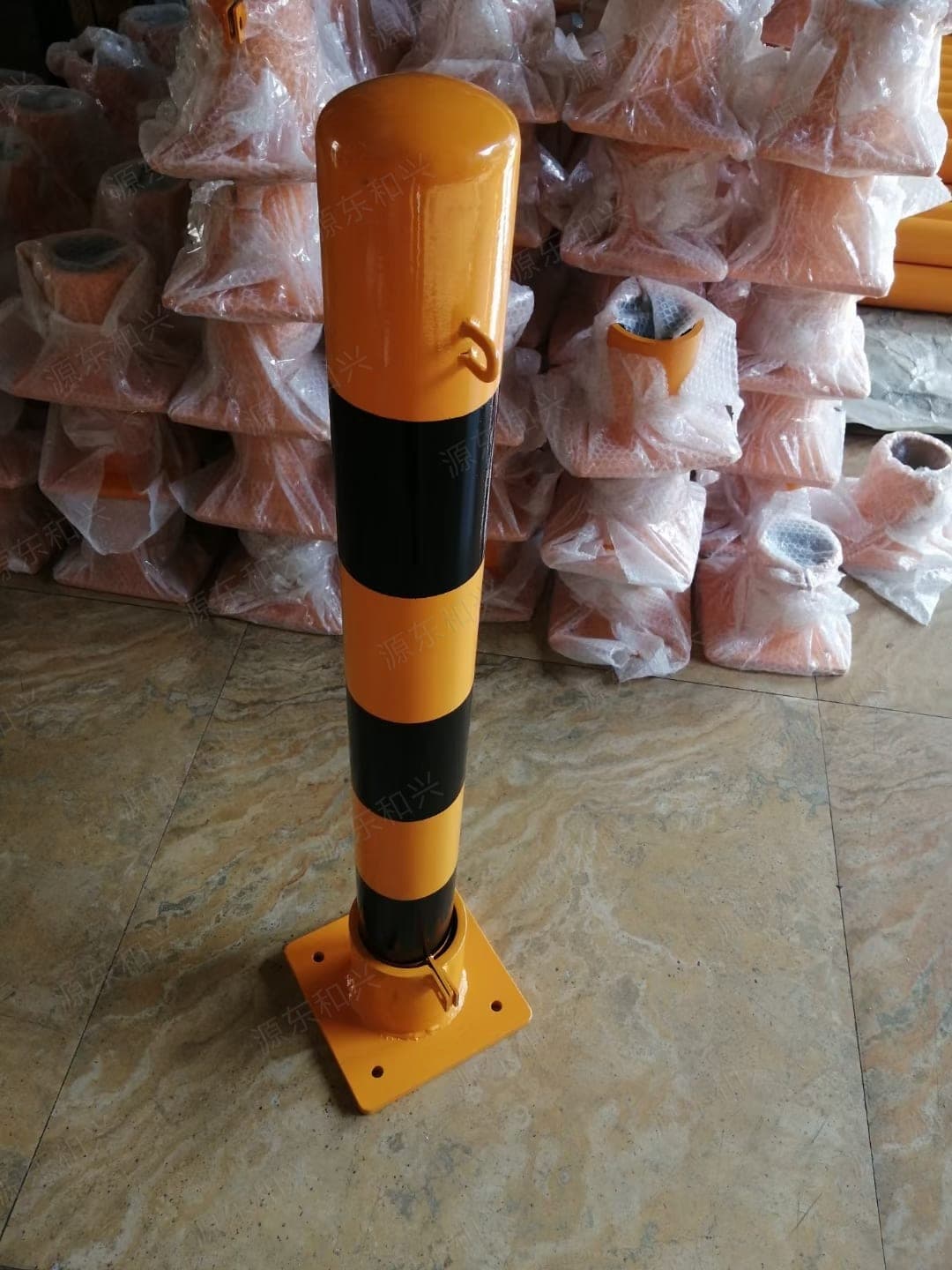
| Removable | Tube drops into a base, with a lifting ring or lock tab | Base fixed; the post pulls out when needed | Fire lanes, park entrances |
Workshop and site photos (six shots)
Build spec: same as the Fisherman’s Wharf order
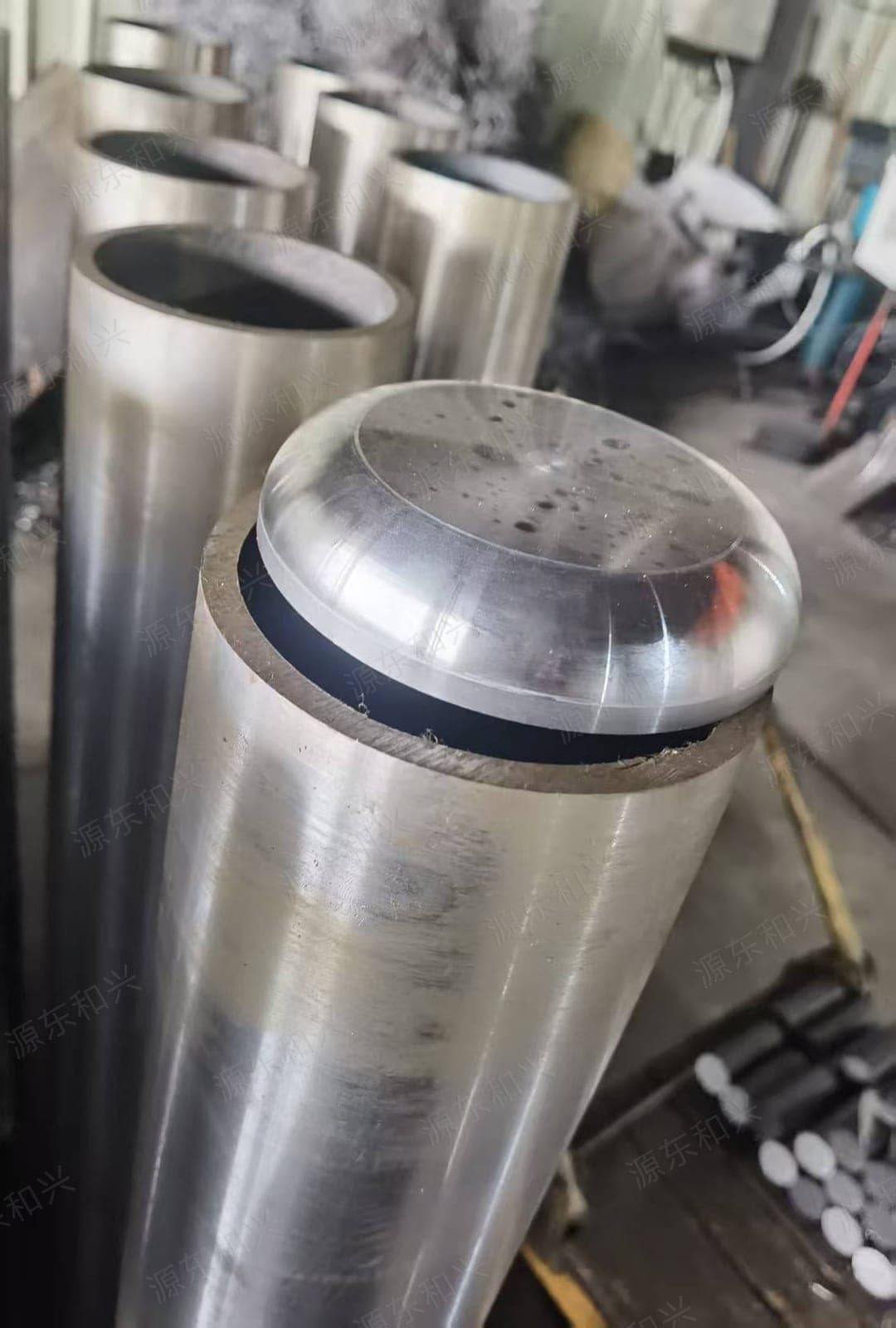
Regular work uses 304; heavier chloride exposure is quoted in 316L. An in-ground post is more than the part you see: the Fisherman’s Wharf order was 1.1 m tall overall, 0.6 m above grade, 0.5 m buried, 8 mm wall, with the tube base grouted in concrete; reflective film sits in turned ring grooves, and the dome cap is a separate piece over the tube mouth. How to read those numbers and what to check on delivery is in the delivery record.
Common questions
How is the round cap welded?
The dome is not machined from one tube — it is a separate cap over the tube mouth. Stainless heads are TIG welded and the seam is ground out.
What size is the base flange?
Square and round plates are both standard, usually four anchor bolts. Special sizes are made to order — the plate follows the floor condition and the loads, so we do not fix a number here.
Can the removable post really be pulled out?
Yes. The tube drops into a fixed base — the real photo shows the lifting ring and the lock-tab base. Pull it out when a vehicle needs through, drop it back after. Locking can be configured to the client’s request.
Can you make styles beyond these?
Yes. Send a drawing, or a photo of a sample with the height and finish you want, and our engineers quote after checking the process.
Send a drawing — or just a photo
Send the environment, above-ground height, spacing, quantity and a drawing or site photo via Contact. More real photos live in Projects, and how to pick a grade is in 304 or 316L.
Other articles in this section
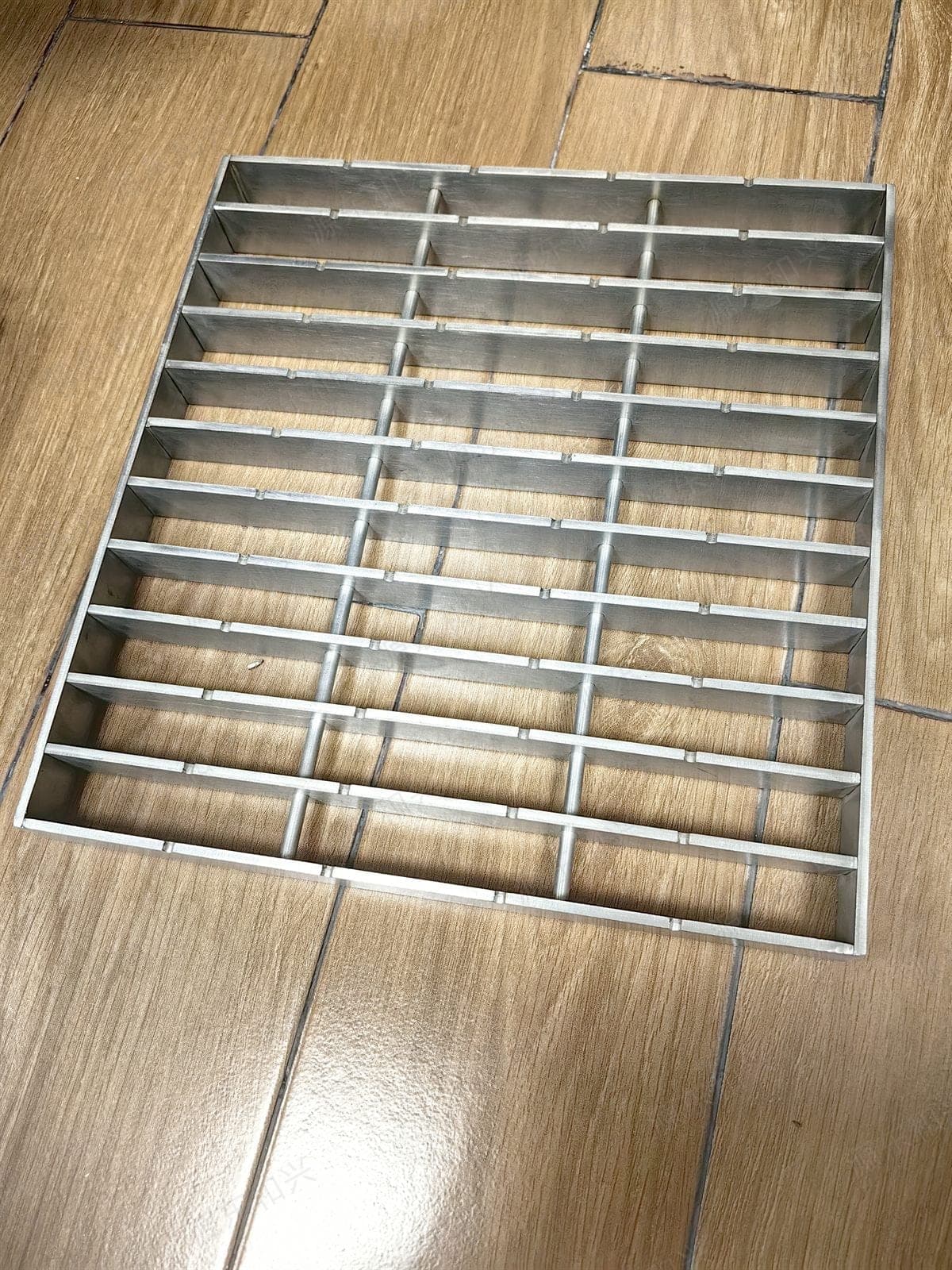
A Drain Grating With No Visible Welds: Mortise-Tenon Fit-Up, Back-Side Welding, Ground Frame
A Japanese customer’s drain grating order with one requirement: no welds visible from outside. Routine work puts every weld on the front, so we borrowed the mortise-and-tenon idea: tenons laser-cut on each bar end, notches in the frame, engage first, weld from the back, then grind the frame. 316L plate, 6 mm thick — five real workshop photos, including a scrapped prototype.
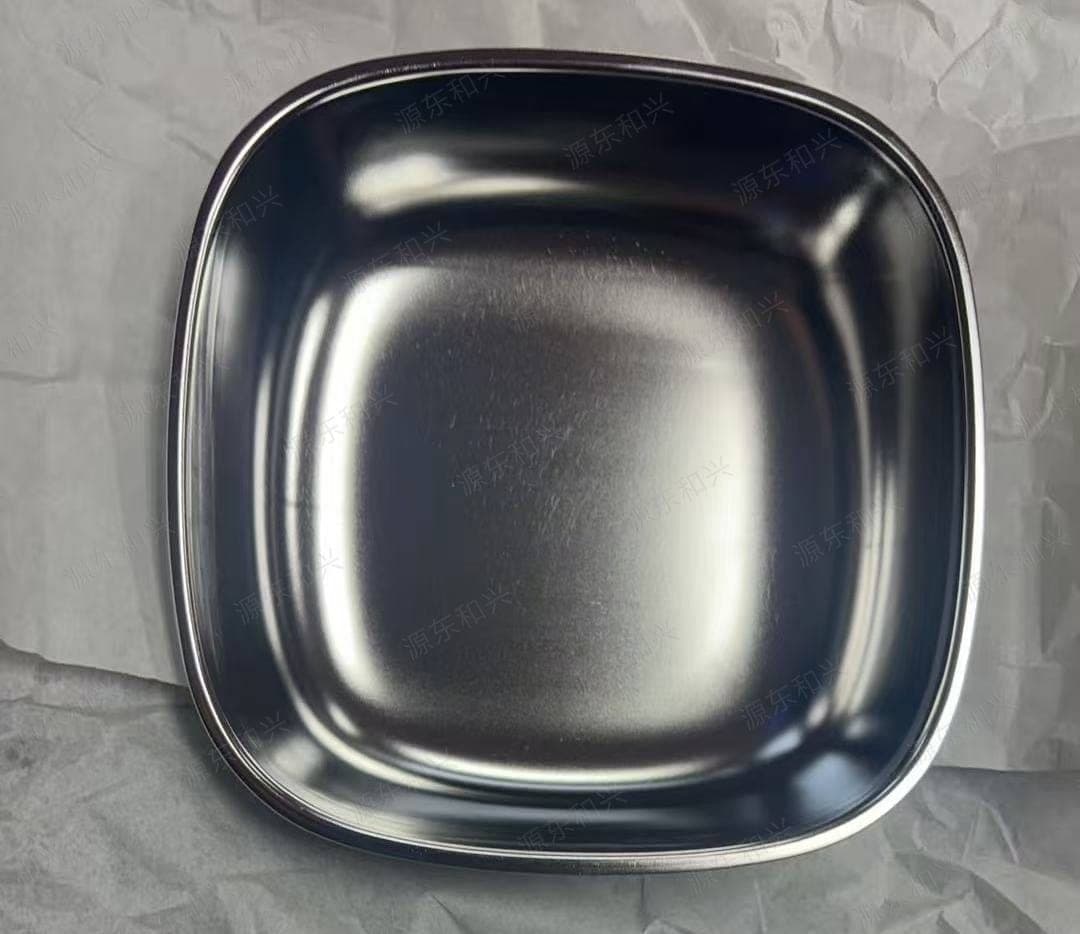
The Customer Only Wanted Plate — One Extra Question Became a Tray Order
The order started as a few 200 mm × 200 mm stainless plates, dimensions stated crisply. One extra question — what is it for? — surfaced the real need: trays, with fairly high surface demands. We built the whole process plan, the customer liked it and placed a large order. 304 material; both pictures here are real photos of the customer’s sample tray, before and after our surface treatment.