
Shunde Wharf Bollards: 304 Stainless Steel
How 100+ stainless bollards at Shunde Fisherman's Wharf were specified and built, including foundations, reflective sleeves, dome caps and checks.
Where this order was built, and what it separates
Fisherman's Wharf sits on the south bank of the Desheng River in Ronggui, Shunde, Foshan. This stretch was the district's grain wharf from the 1960s until it closed in 2000; the old plant was redeveloped under the 2015 regeneration programme, phase one opened in December 2016, and in January 2019 the site was graded a national AAA tourist attraction. It also carries two titles awarded by other bodies: a Guangdong Cantonese-cuisine street and one of the first Foshan night-time culture and tourism consumption clusters. The brick walls, old mooring piles and diesel machinery were left where they stood, and the sheet-iron warehouses became graffiti walls.
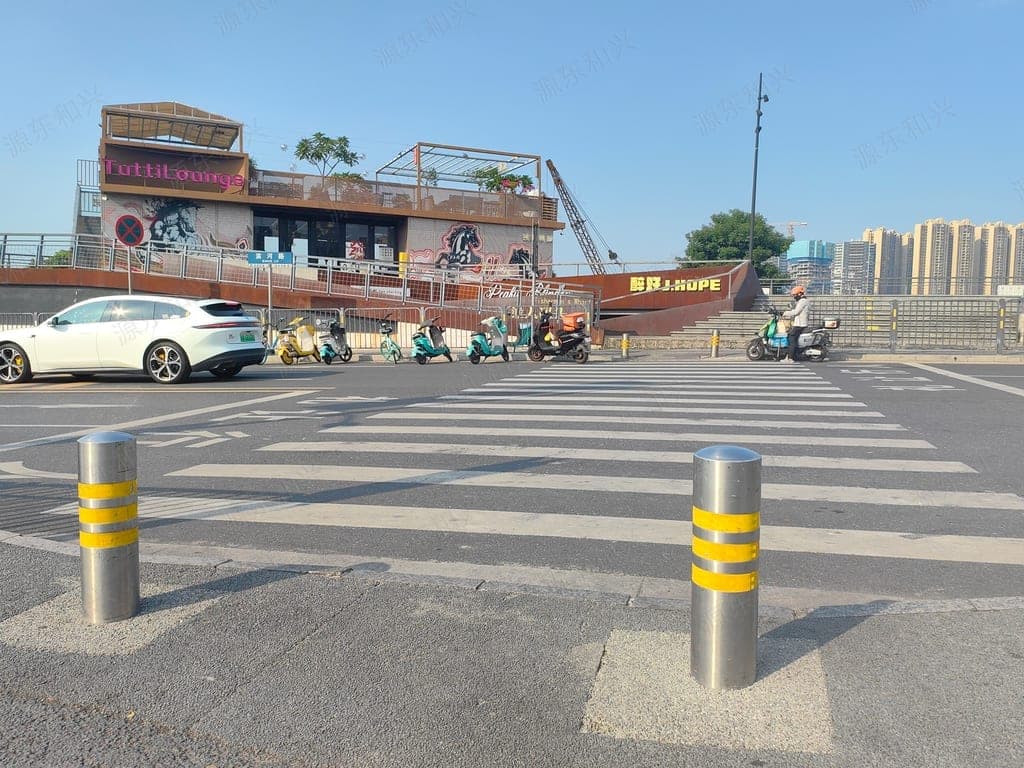
What we supplied is the 100-plus stainless steel bollards along both sides of the main road, completed in March 2025: one at each end of every crossing, so pedestrians and vehicles keep to their own half. The grading and the titles belong to the park; this article is only about our posts.
How to tell these posts really are at the wharf
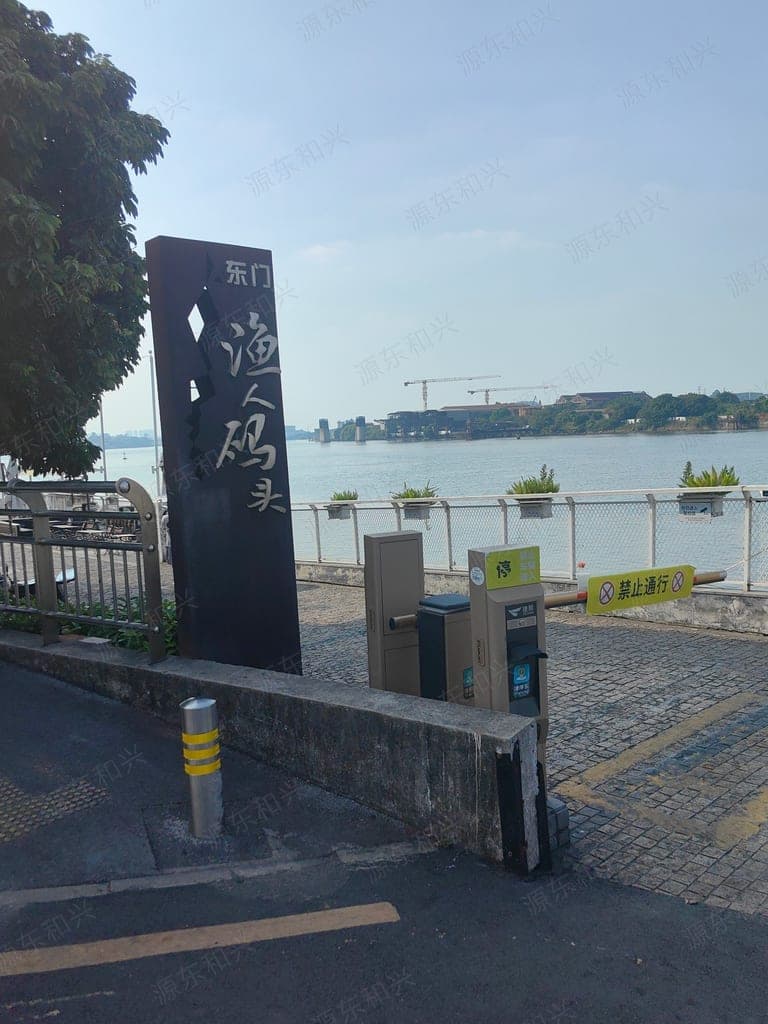
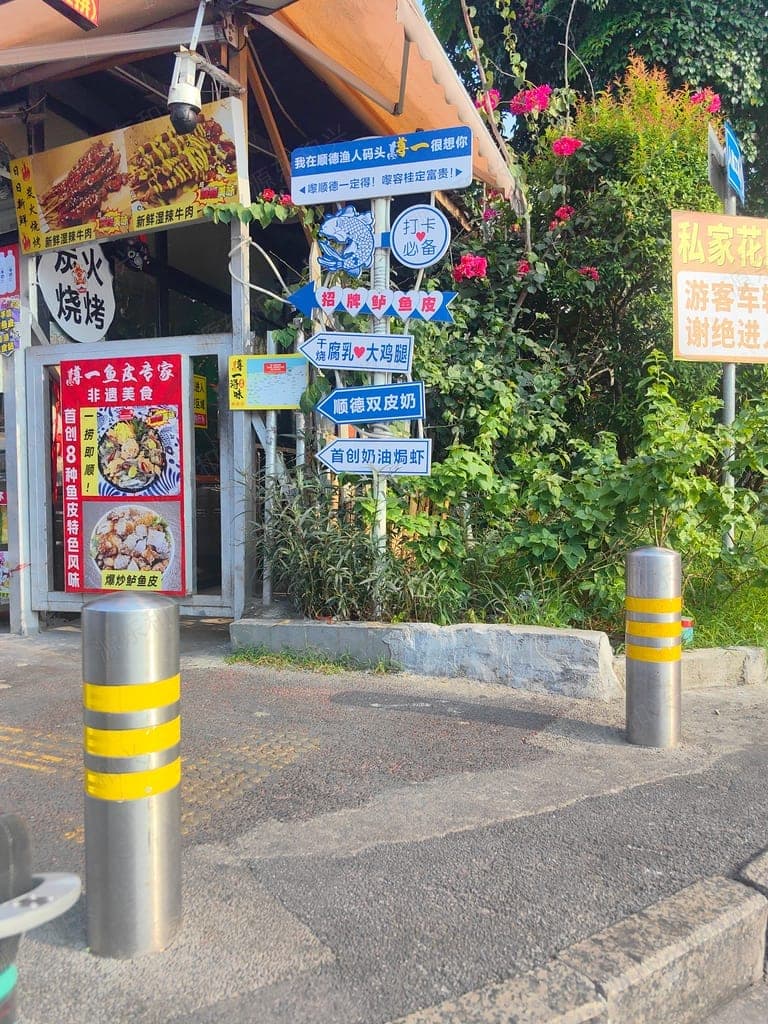
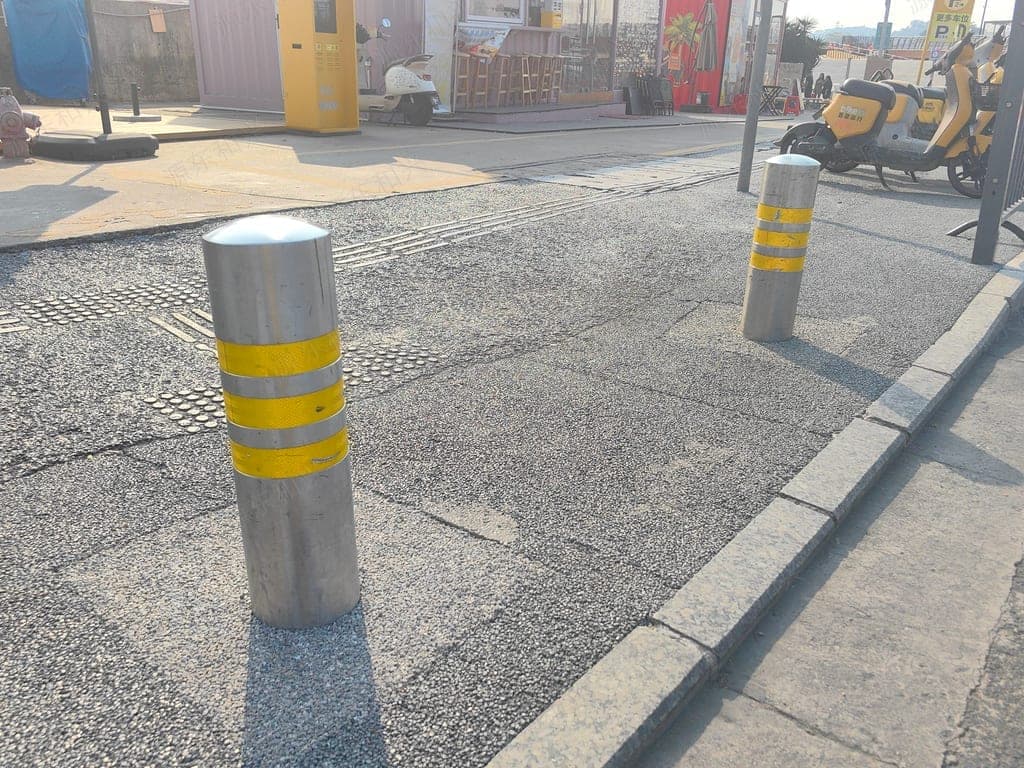
A delivery record should show where it was built, so these two shared-frame photographs go up exactly as they came out of the camera — nothing staged, nothing retouched. At the east gate, the tall sign naming the wharf stands on a concrete plinth and one of our posts sits at the lower corner of that plinth. At a shop frontage, two of our posts stand in front of the park’s blue photo-op signboard. The riverside metal railing, the boom barrier and the shop signage and posters inside the frame are not ours.
How to read the specification
The specification for this order: 304, 8 mm wall thickness, 0.6 m above ground, 1.1 m overall — the missing 0.5 m is buried.
Wall thickness means the thickness of the tube wall, not how fat the post looks. At 8 mm these are heavy-wall bollards: whether a knock from a vehicle or a hand trolley leaves a dent or bends the whole post depends on that one figure. Height above ground and depth of embedment are two separate questions — the first decides whether the visible section does its job, the second decides whether the post stays upright.
| Item | This order | What it governs |
|---|---|---|
| Grade | 304 | The baseline for outdoor atmospheres; heavier chloride duty is a separate conversation |
| Wall thickness | 8mm | Tube wall, the first line against dents and bending |
| Above ground | 0.6m | The visible section: what it screens and how far people see it |
| Overall height | 1.1m | Including the 0.5 m that stays underground |
| Embedment | 0.5m | What keeps the post standing is mostly this section |
| Tube cavity | Filled at the base with C30 concrete | Not a hollow tube dropped in and backfilled |
What keeps a bollard upright is the 0.5 m you cannot see
A hollow tube dropped into a hole and backfilled around does not last long on a pavement. A bollard carries a side load: once the root starts to lever, the whole post wobbles. Here the base of the tube cavity is filled with C30 concrete within the embedment depth, so the load spreads from the wall into the backfill through that concrete. The 0.6 m you see is only the visible part — the solidity you feel when you lean on it comes from the 0.5 m underground.
In the photographs taken on site again later, the posts carry scratches and the edges of the reflective sleeve are worn, and no rust is visible. We do not retouch the scratches out, and we do not write lines like "never rusts".
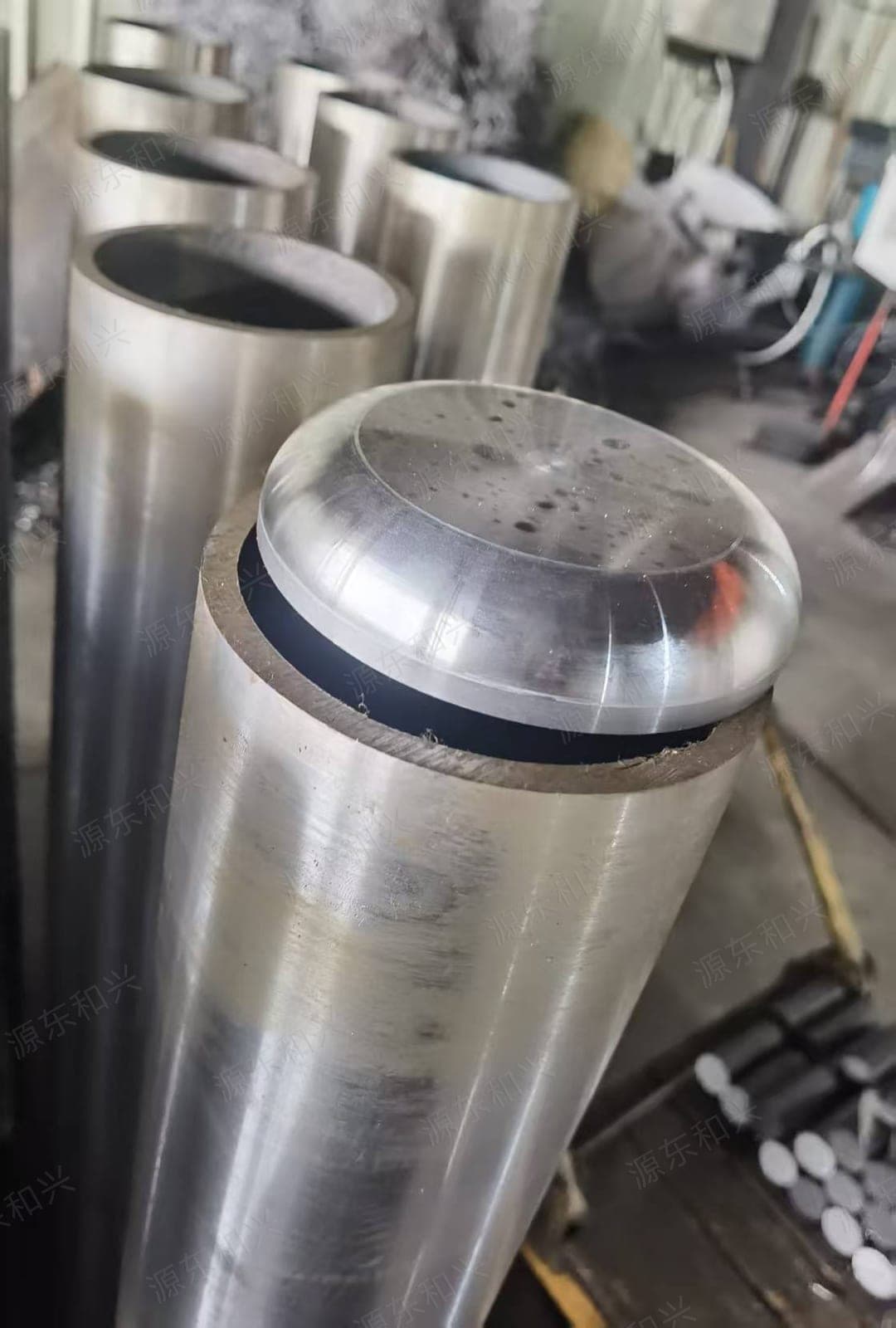
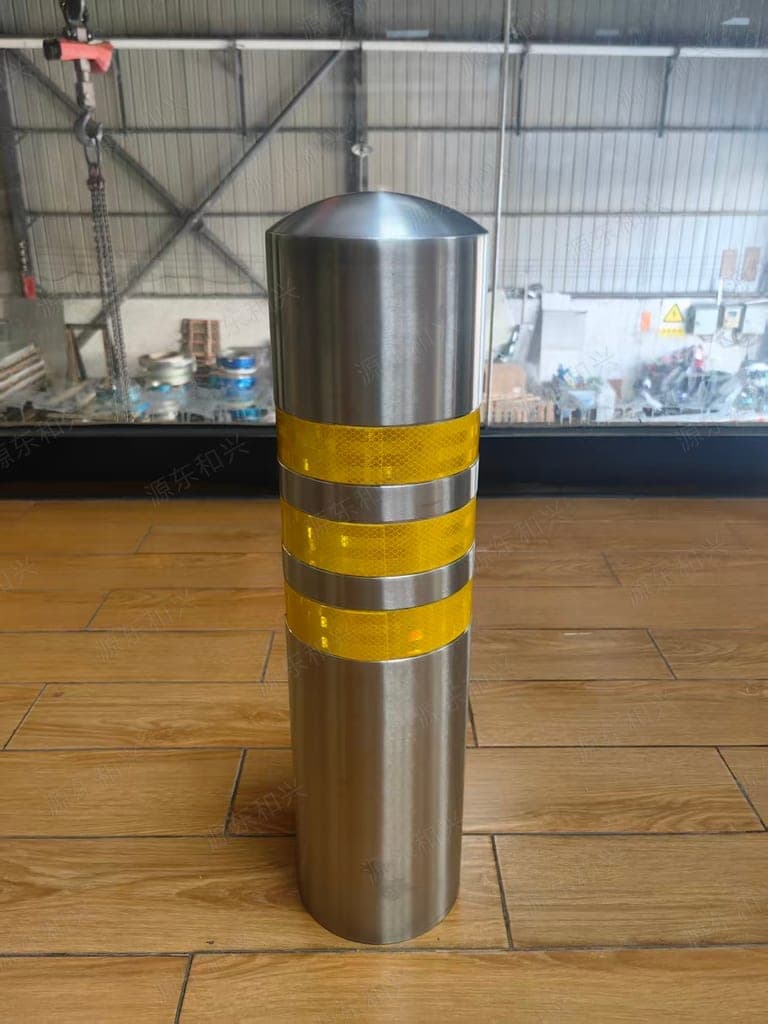
Reflective sleeve, machined groove and dome cap
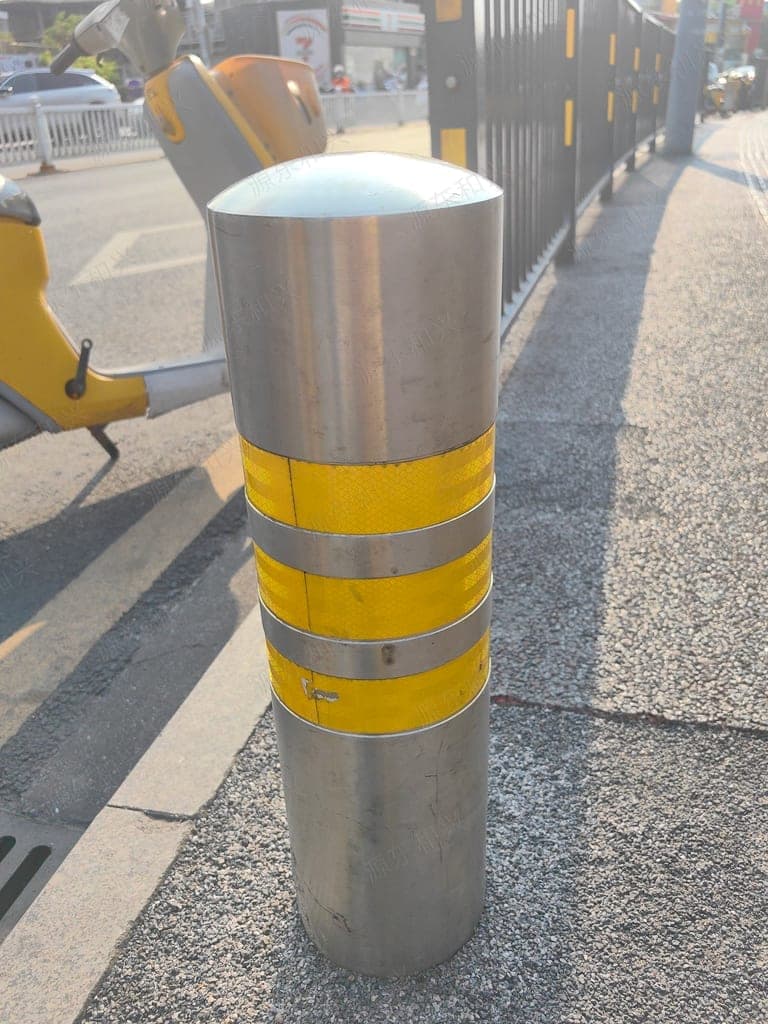
The post body carries a reflective sleeve: a bright line by day, far more obvious under headlights at night. The sleeve is not stuck straight onto the tube — a circumferential groove is turned into the post first and the sleeve sits in that groove, flush with the surface.
The dome cap at the top is a separate piece fitted over the mouth of the tube; it is not turned from the same bar as the post. The batch installed here has three reflective bands.
How it was built and how it shipped
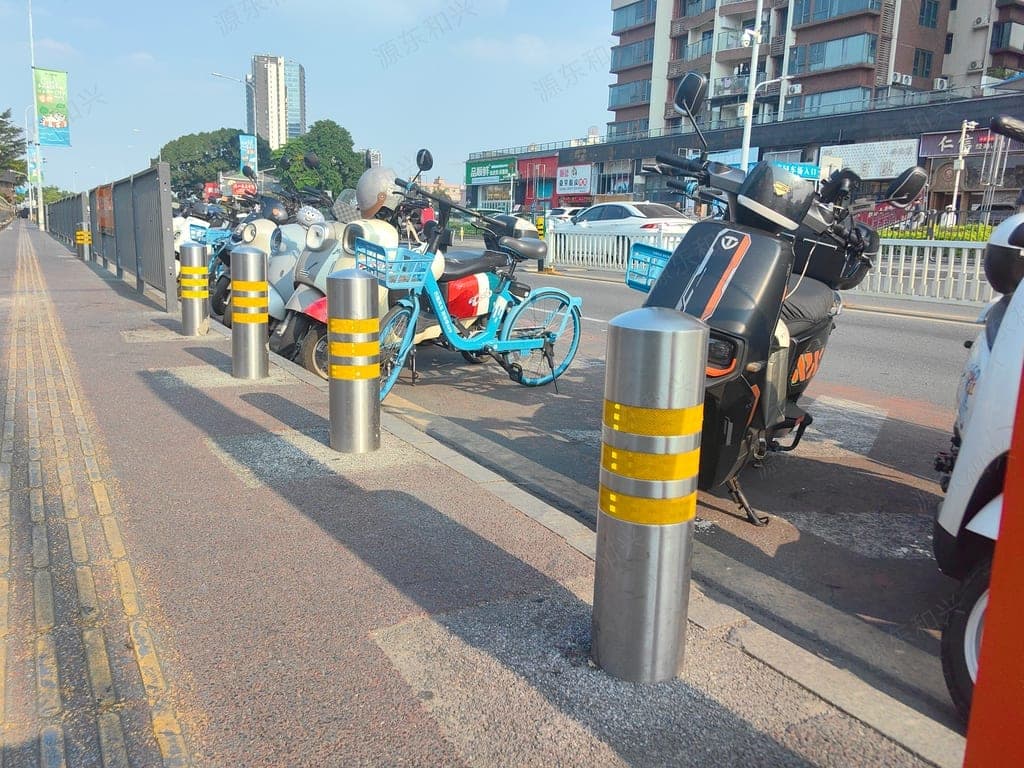
These were finished post by post in the workshop, wrapped and stacked, then sent to the site as the works progressed rather than all in one drop. This is only one of our bollard patterns; at crossings, ramps and shop frontages, how closely the posts are set and how deep they go are decided by the setting-out on site.
What to check on delivery
- The collar at the root: any cracking between concrete and pavement, any play when you push it. This is what decides whether the post stays standing.
- The reflective sleeve: right number of bands, sitting in the grooves, edges not lifting.
- The post body: plumb, consistent brushed direction, no transit dings.
- Spacing: measured against the setting-out, including any post shifted to clear a manhole cover or a lamp column.
- Quantity and item numbers: delivery note matched against a head count, so a later top-up can name exactly which posts are missing.
Questions we get asked
Is 304 acceptable outdoors on the coast?
This order is 304, on the main road of the site on the south bank of the Desheng River. Where the chloride load is heavier we quote 316L: 316L carries molybdenum and 304 does not, and molybdenum is what resists chloride pitting. Grade selection only begins once the service environment has been described.
Is a thicker wall always better?
No. Wall thickness is settled together with the service environment, the post height and the spacing. For this order — 1.1 m overall with 0.5 m buried — 8 mm is the value that matches that combination. Taller posts at wider spacing need a separate calculation, and adding wall thickness blindly only adds material and self-weight. Send the exposed height, the spacing and the loads you expect, and we choose the wall from that combination.
Can you build to our own drawings?
Yes. Most bollard work is built to drawing: pattern, height, wall thickness, the number of reflective bands, lifting eyes or cut-outs — all of it changeable. Send drawings if you have them; if not, send the length, width and height or a site photograph, and our engineer assesses the fabrication risks before quoting.
How many per batch, and what lead time?
This order was over 100 posts, shipped in batches as the works moved. The quantity, the site access dates and how much the site can store together set the shipping rhythm; state all three when you order and we schedule production around those milestones.
Drawings if you have them, photographs if you do not
On riverfront and other outdoor duty, durability only becomes a question once the environment and the method match. Send the service environment, exposed height, spacing, quantity and either drawings or site photographs through Contact. Photographs of similar parts are under Project Cases, and the rule for choosing a grade is in 304 or 316L.