
What If a PC Case Were Stainless? A Materials Ledger Started by a Concept Image
GTA6 on PC keeps being rumoured and flagship GPUs keep running hotter, so builders are thinking about cases again. We produced two brushed-stainless concept images as a lead-in — stated plainly: concept images, not real products; we never built this case. This article is the materials ledger: look, rust, weight, cost, fingerprints — and which shop processes a real one would go through.
This article is an idea, not a delivery
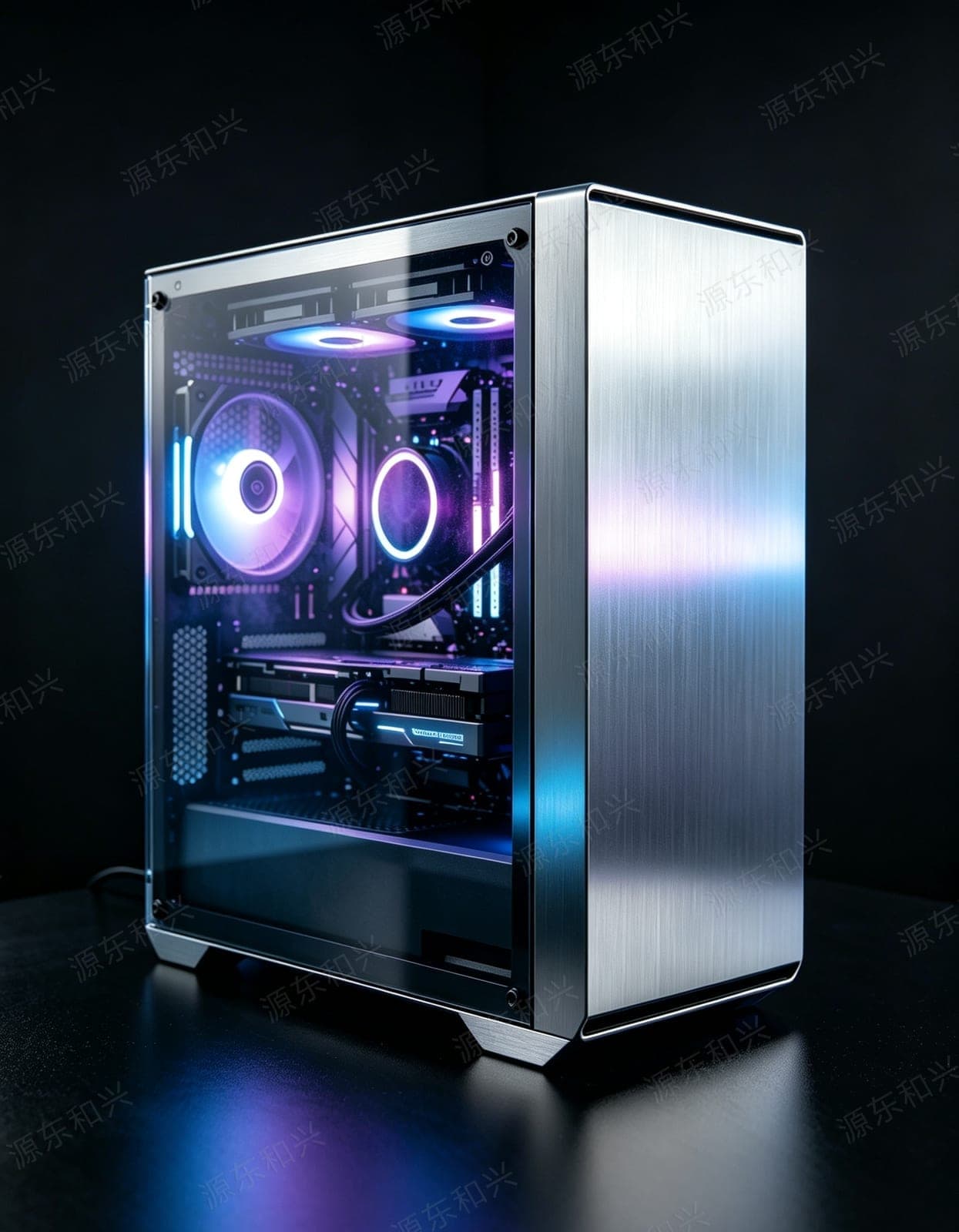
This section collects ideas: take an everyday object and rethink it in stainless. Last time it was a Guangdong plastic stool; this time, a PC case. The key sentence first: the two case images below are concept images we produced for promotion — a feel for what a brushed stainless case would look like. They are not real products. We have never built or prototyped this case, and nobody has ordered one from us. This article is an idea, not a delivery.
Why a PC case, all of a sudden
Two hooks. One: rumours of a GTA6 PC release never stop, so builders start planning machines early. Two: GPUs run hotter each generation — cards like the RTX 5090 Ti are still rumour, and we do not treat unreleased things as fact. Games and GPUs are not our business and we will not judge them; we are sheet-metal people, so we idly asked: what if a case shell were neither powder-coated mild steel nor aluminium, but brushed stainless?
The stainless case ledger: count it on both sides
The good side first: brushed metal is the real colour of the alloy, no paint means no chipping and no yellowing, and 304 shrugs off sweat and humid springs indoors. The honest side next: stainless is heavy — much heavier than aluminium at the same thickness — so hauling a full rig becomes a workout; material plus fabrication costs run well above powder-coated steel; and a brushed surface shows fingerprints, especially under RGB lighting. One more honest word: a case is not two pretty panels — motherboard standoffs, PCI slots, EMI shielding, grounding and airflow are the real engineering, separate from which sheet you choose. The table below is general materials knowledge, not the specification of this "product" — it has none.
| Case shell | Surface & paint | Weight | Cost | Watch out for |
|---|---|---|---|---|
| Powder-coated mild steel | Any colour you like | Medium | Lowest; the most mature process | Chips; bare spots rust |
| Aluminium (anodised/brushed) | Fine look, stable colour | Lightest | Higher | Soft; dents easily |
| Brushed 304 | Bare metal, no paint | Heaviest | High | Shows fingerprints; costly to work |
The two concept images
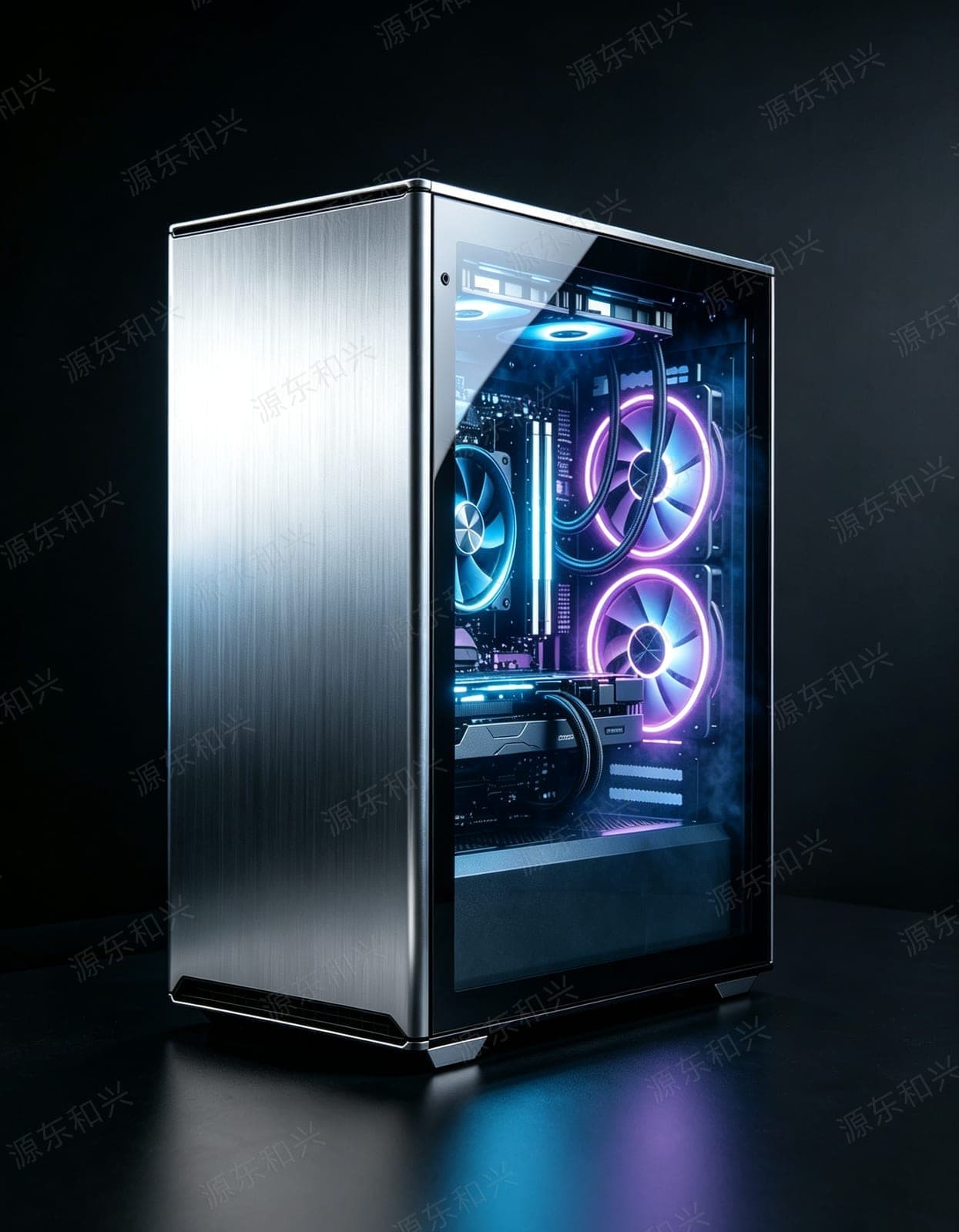
Both are concept renders: composition, lighting and metal texture were made to show a direction, not photos we shot.
If it were real, the process would be routine
A shell like this is ordinary sheet metal work: laser cutting, bending, welding, grinding, brushing. Thickness, hole positions and stiffeners must come from real drawings — holes shown on a concept image are not evidence. The boundary, stated plainly: we do fabrication, not mass-produced standard cases; motherboard compatibility and EMI certification are outside what we deliver. But if you have a housing, bracket or panel of this kind to build from drawings, send the drawings or a site photo and we will answer on thickness, quantity and surface finish.
Questions this one draws
Have you actually built this stainless case?
No. The two images are concept images we made for promotion — a lead-in only. We have never built or prototyped this case. This article is an idea, not a delivery.
Can you mass-produce PC cases?
A standard case involves motherboard compatibility, EMI shielding, airflow and certification — outside our scope. What we do is fabricate sheet-metal parts from drawings: laser cutting, bending, welding, grinding and brushing are daily work here.
Stainless or aluminium case — which is better?
General materials knowledge: aluminium is light with a fine anodised look, but soft and pricey; stainless has strong metal character, resists rust and needs no paint, but is heavy and shows fingerprints; the market mainstream remains powder-coated steel — cheap and mature. It depends on whether you value lightness, looks or budget.
Can the dimensions and specs in the images be used?
No. Concept images carry no real dimensions, and the hardware inside them is imagined too. If you want sheet-metal parts made to a design, send real drawings or a site photo.
That is where this idea rests
This case article: concept images, textbook arithmetic. Its sibling here is The plastic stool, recast in stainless; for things we actually built, see the 100-plus stainless bollards at Shunde Fisherman’s Wharf — every photo there is on site. Capabilities and routine grades are in the product guide; if you have sheet-metal parts to build from drawings, send them via Contact.
Other articles in this section
Stainless Stool Concepts & Real Embossing
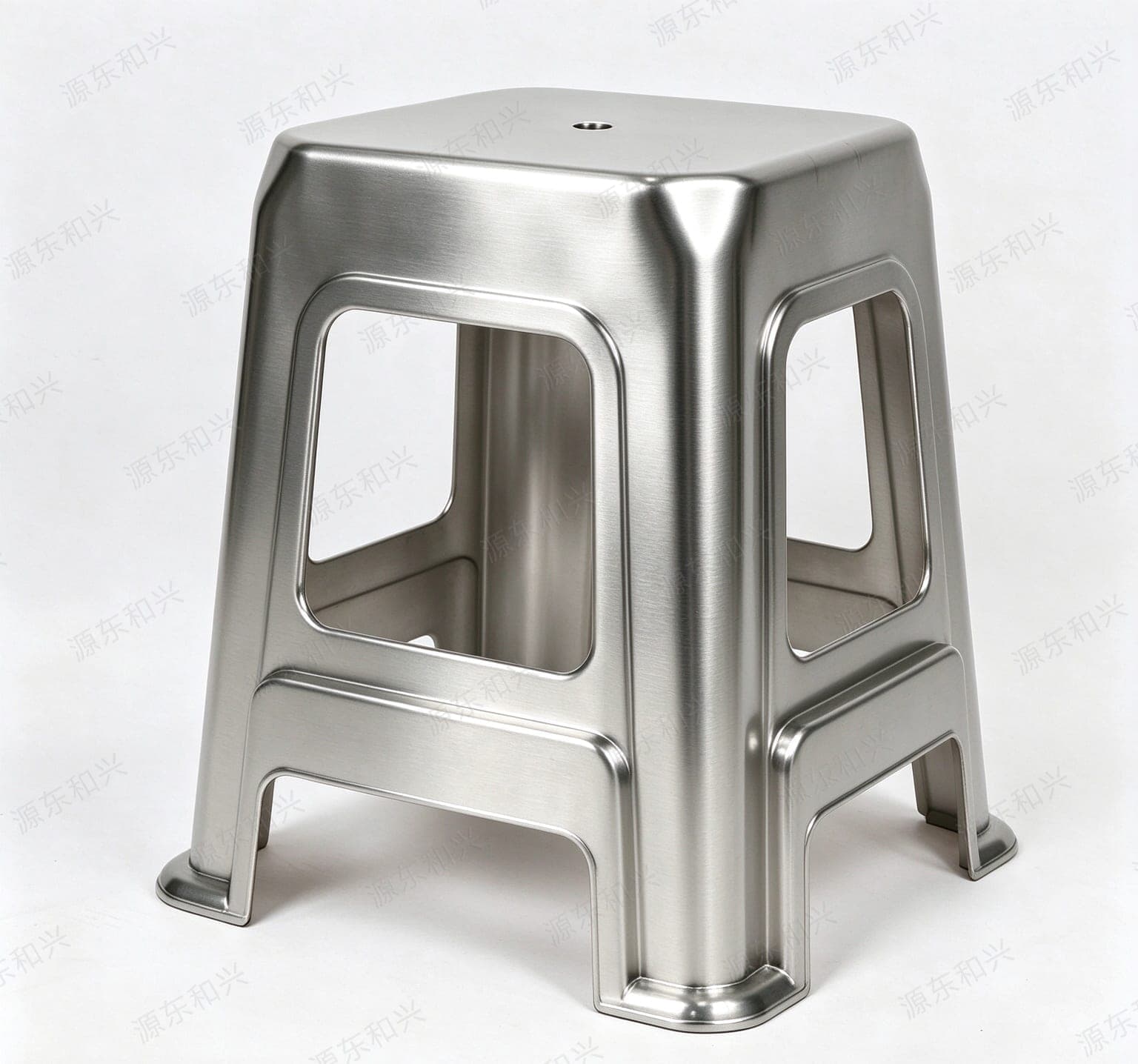
AI concept renders explore stainless stool designs we have not built. The article also shows real embossed panels and explains three workshop-pressed patterns.
The Stainless Geometry Series: The Shapes First, Then How They Get Made
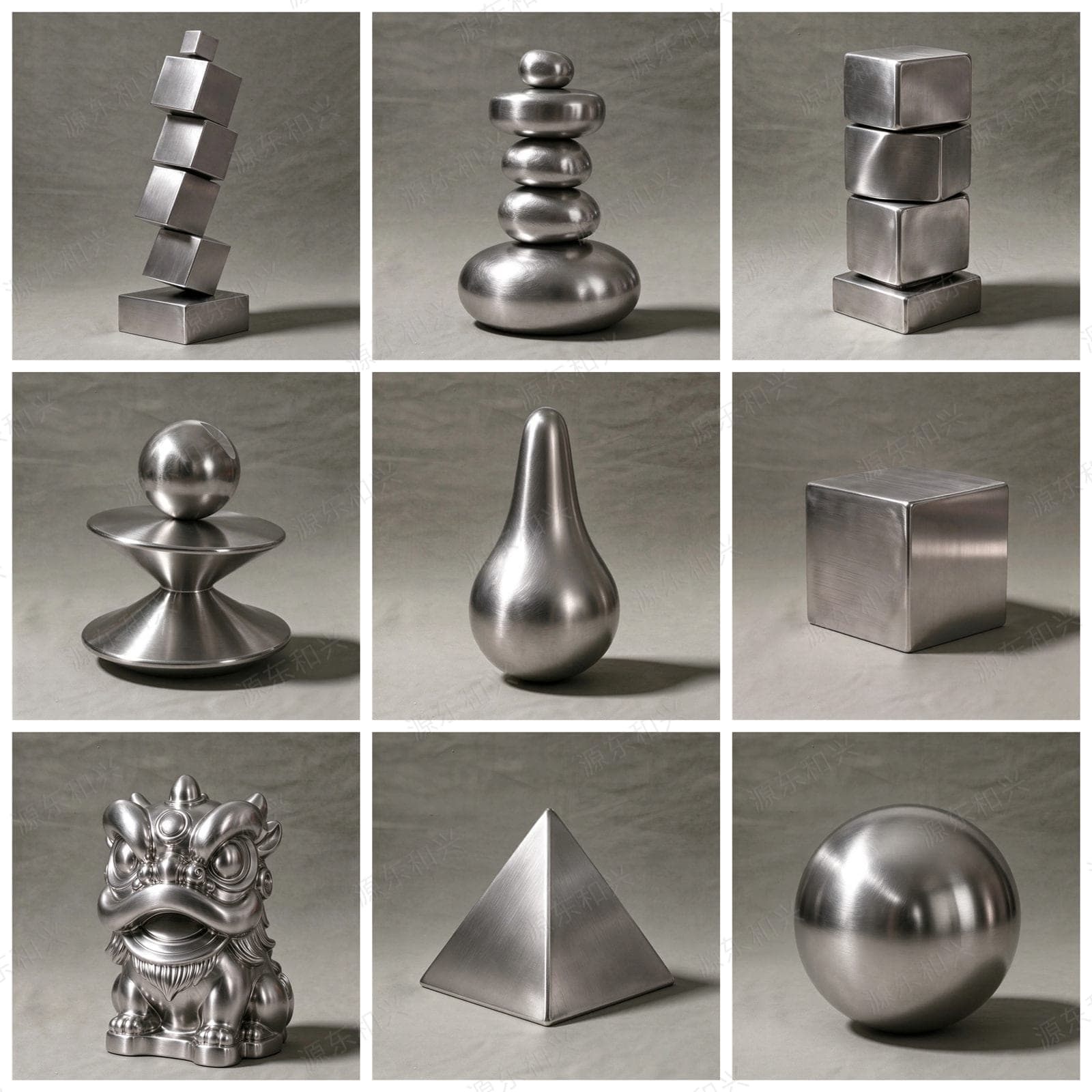
A set of stainless geometry designs: stacked blocks, rings, free-form curves and a figurative piece, nine tiled into the cover. The designs are the opener — whether they can be built is answered by a real workshop photo. Desk ornaments, installations, custom gifts: send the idea over.