
Stainless Stool Concepts & Real Embossing
AI concept renders explore stainless stool designs we have not built. The article also shows real embossed panels and explains three workshop-pressed patterns.
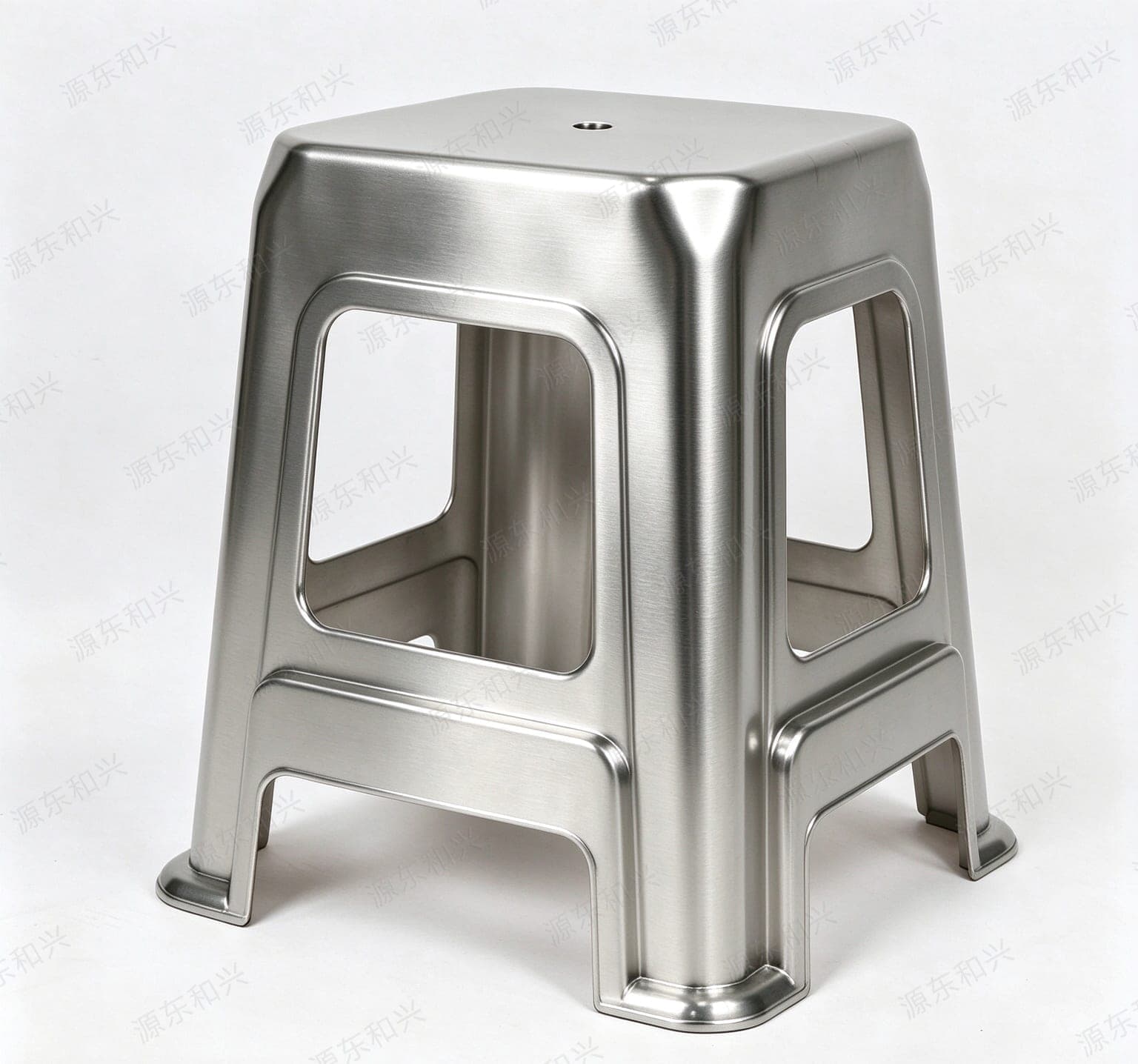
This article is an idea, not a delivery record
This section collects ideas rather than deliveries: an everyday object, thought through again in stainless steel. The first one starts with Guangdong’s plastic stool — the one that costs a few yuan, gets carried out from a dai pai dong at a moment’s notice and is not missed when it goes missing. We do stainless sheet-metal work, so we looked at it and asked what an embossed stainless seat panel would be like.
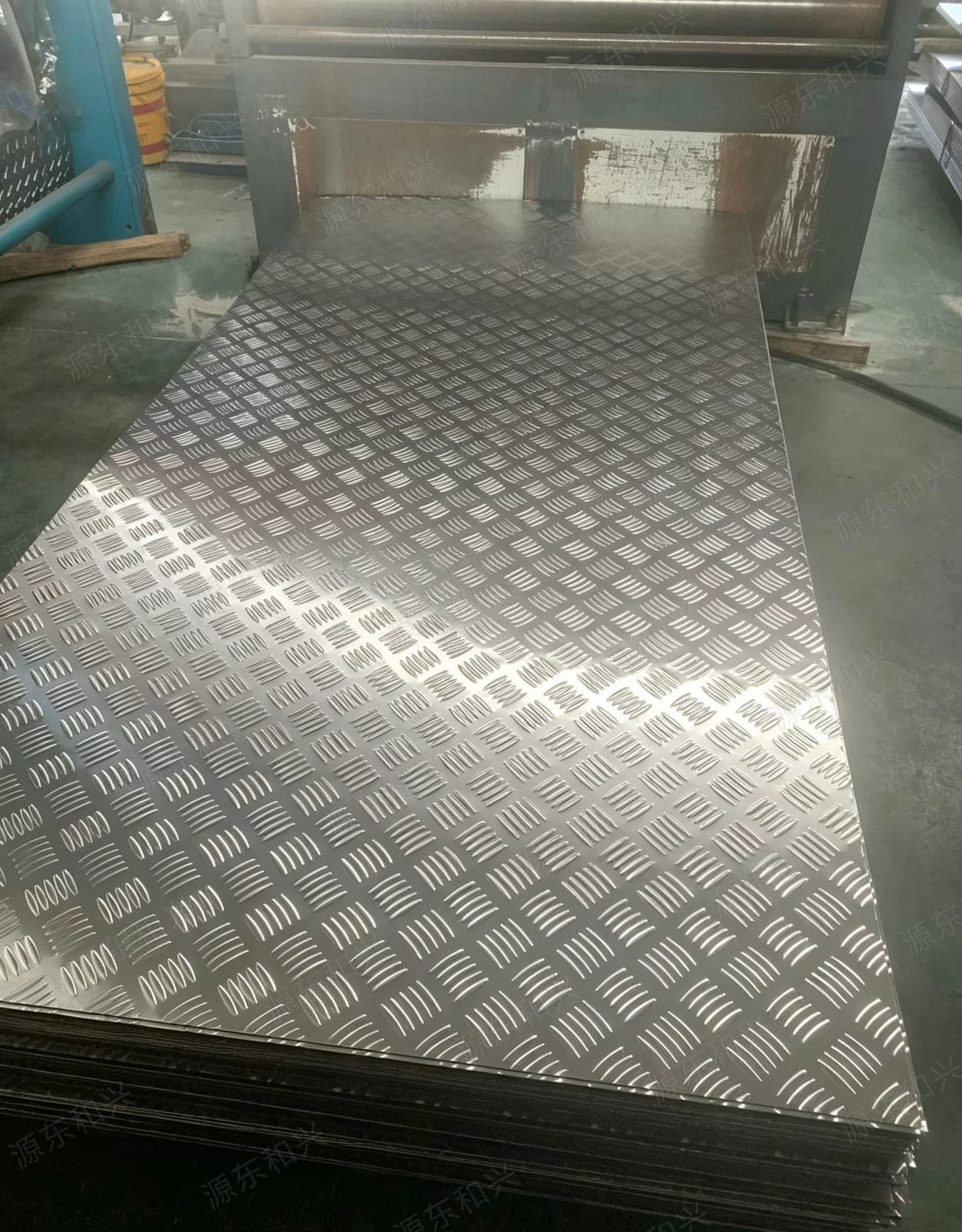
The awkward part comes first: the stool images below are AI-generated concept renders. We have never built this stool and never supplied one, and the dimension numbers printed on the renders were invented by the model — they are not our specification. The only photograph here is of an embossed panel and the embossing machine it came off, shot on a phone in the workshop, unstaged and unretouched.
Why the plastic stool lasts: it is not the workmanship
What the media say about this stool is that it is cheap, it is everywhere and every household keeps one — nobody writes about how well it is made. “One stool serves three generations” is a line among Cantonese speakers; we could not find a source for it, so here it stays a joke, not a fact.
Rebuilt in stainless, the two things that stop matching are exactly the cheapness and the casualness. Durability depends on grade, panel thickness and service environment, not on the shape of a stool — so we will not answer “how many generations will this one last” on behalf of an object that does not exist yet. An answer needs a sample.
The embossing part is real
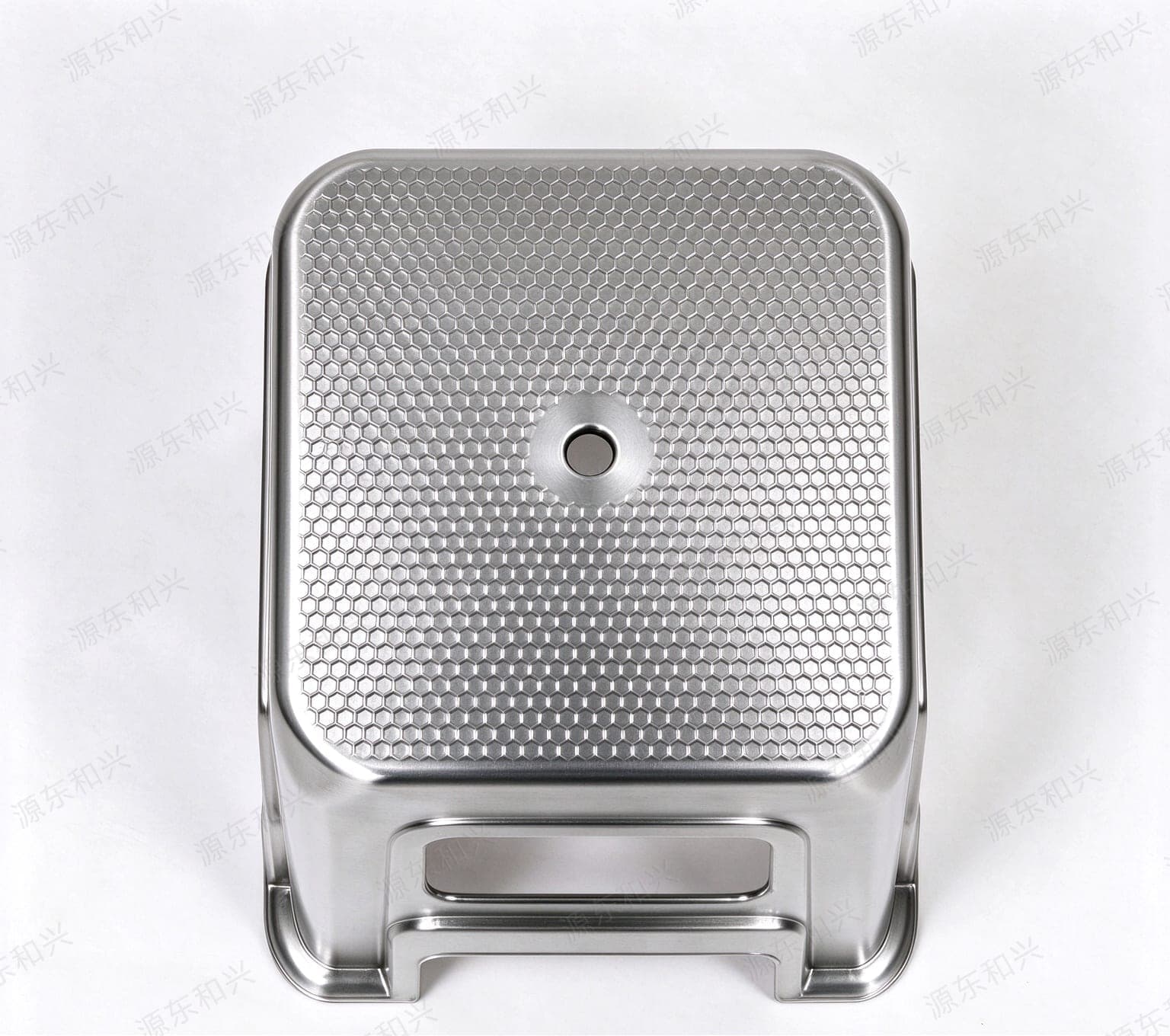
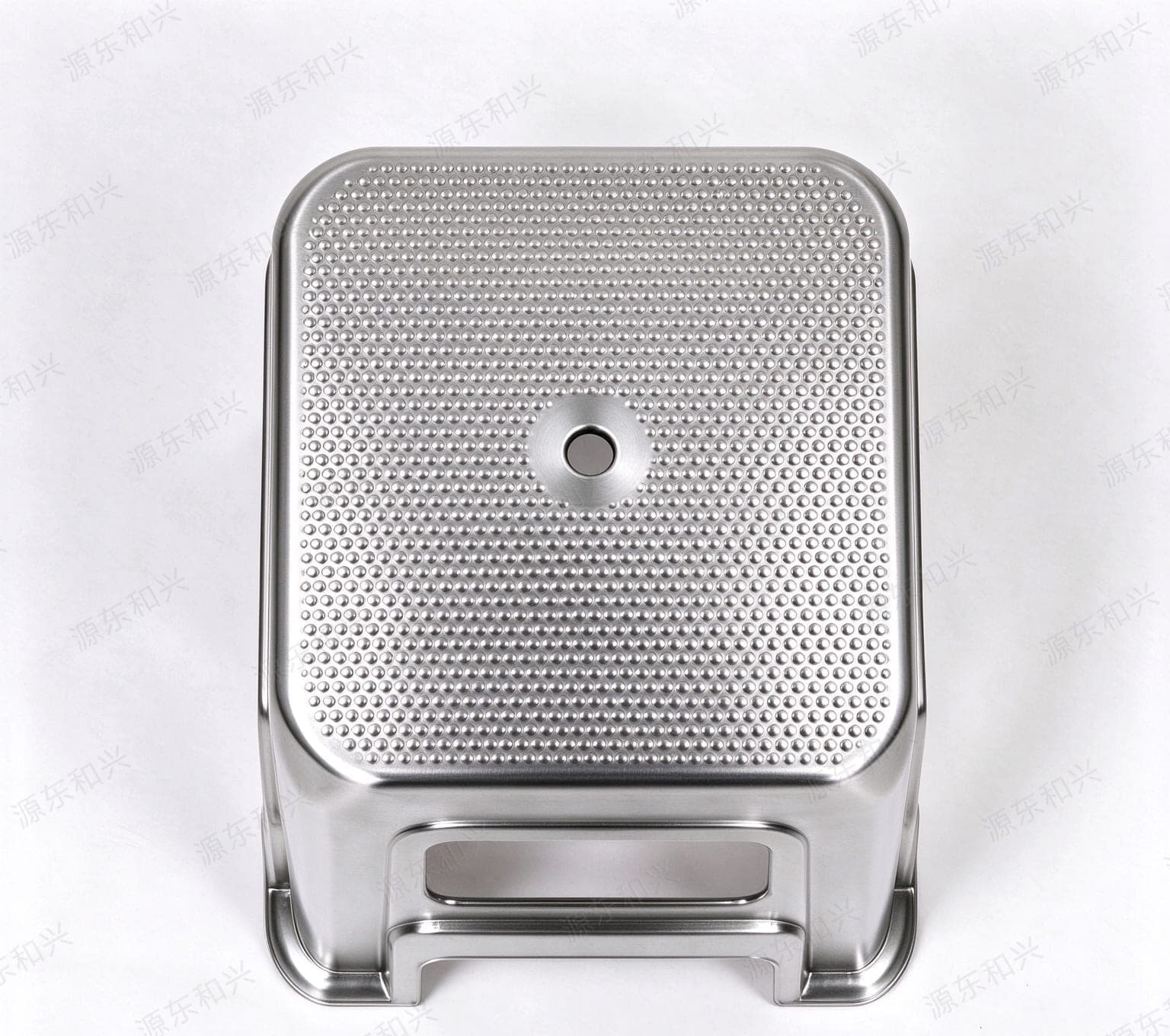
The patterned seat panel is precisely the kind of thing our workshop presses every day. Three patterns are in production now: four-prong blossom, honeycomb and bead. That claim has evidence — the panel in the workshop photograph is four-prong blossom.
Whether this stool needs new tooling, and how that tooling would pair with the forming step, is deliberately not stated here: whether the seat is formed as one piece with a turned edge or pressed flat first and then formed has not been settled, and only a real sample settles it. The same goes for batch size — that starts from the demand.
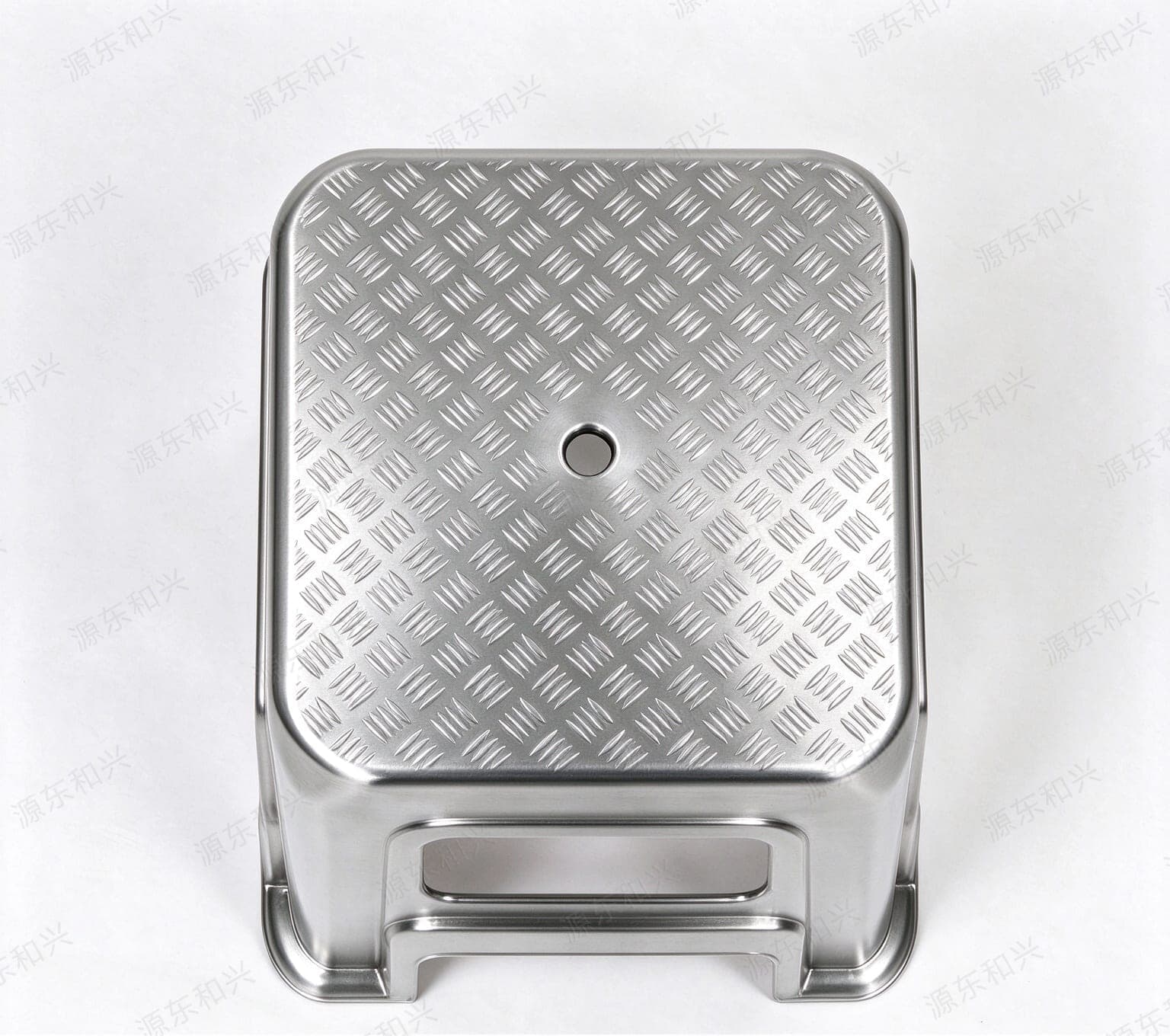
Three patterns we really press — the seat images are still illustrations
The three seat images below are AI illustrations drawn to those three patterns, not product photographs. The photographed panel is sheet rolled with the pattern, its units rows of short ribs; a seat drawn to the same pattern will never match it cell for cell, and counting to find a mismatch is expected.
Which picture is real and which one is drawn
| This image | What it is | What it can stand as evidence of |
|---|---|---|
| Cover: the whole stool | AI-generated concept render | What the idea looks like — not a product photograph |
| Embossed panels and the machine | Phone photograph from the workshop | That we do embossing for real |
| Three seat faces: four-prong, honeycomb, bead | AI illustrations drawn to patterns in production | That these three patterns are pressed today; the seat shape carries no weight |
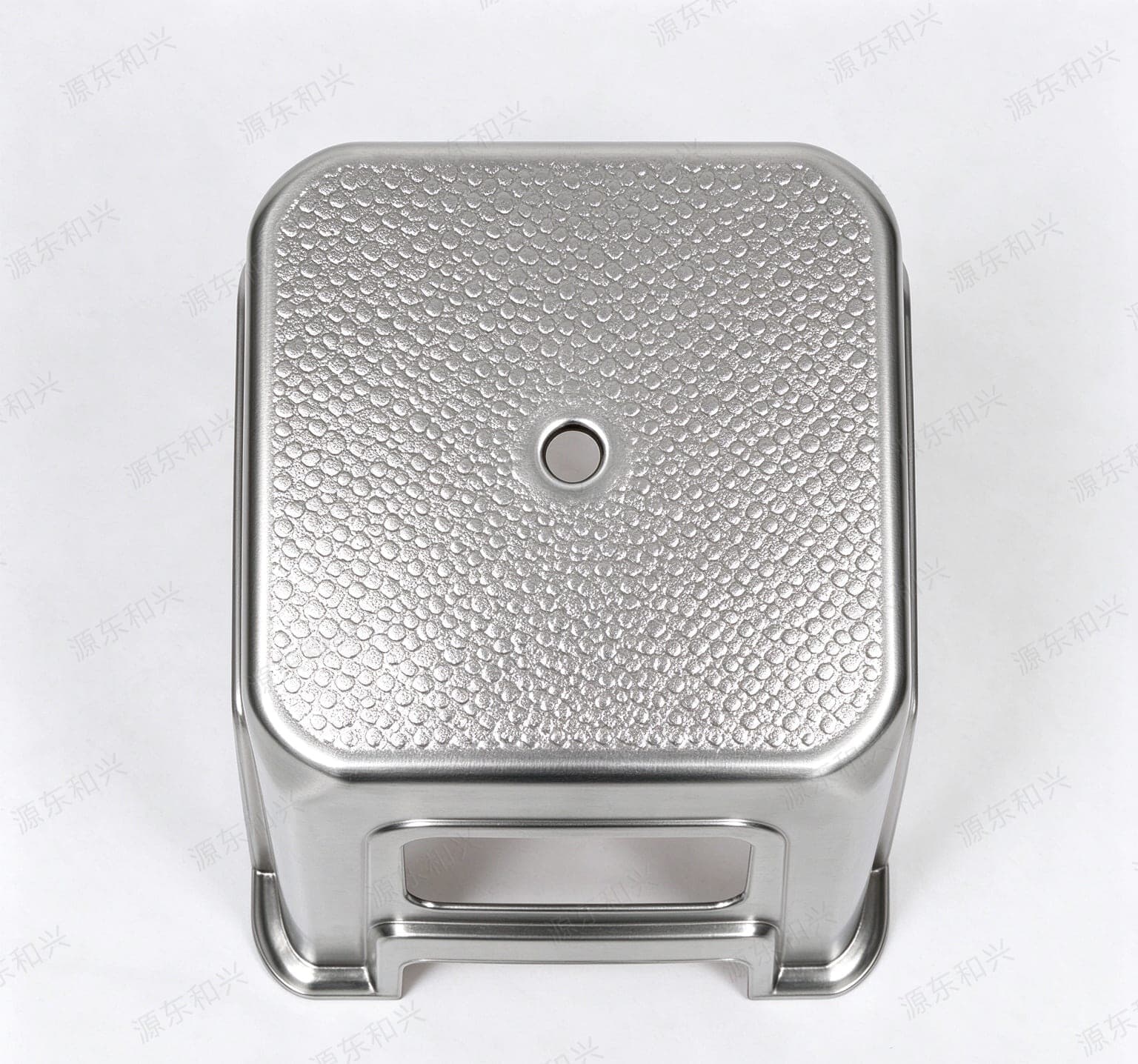
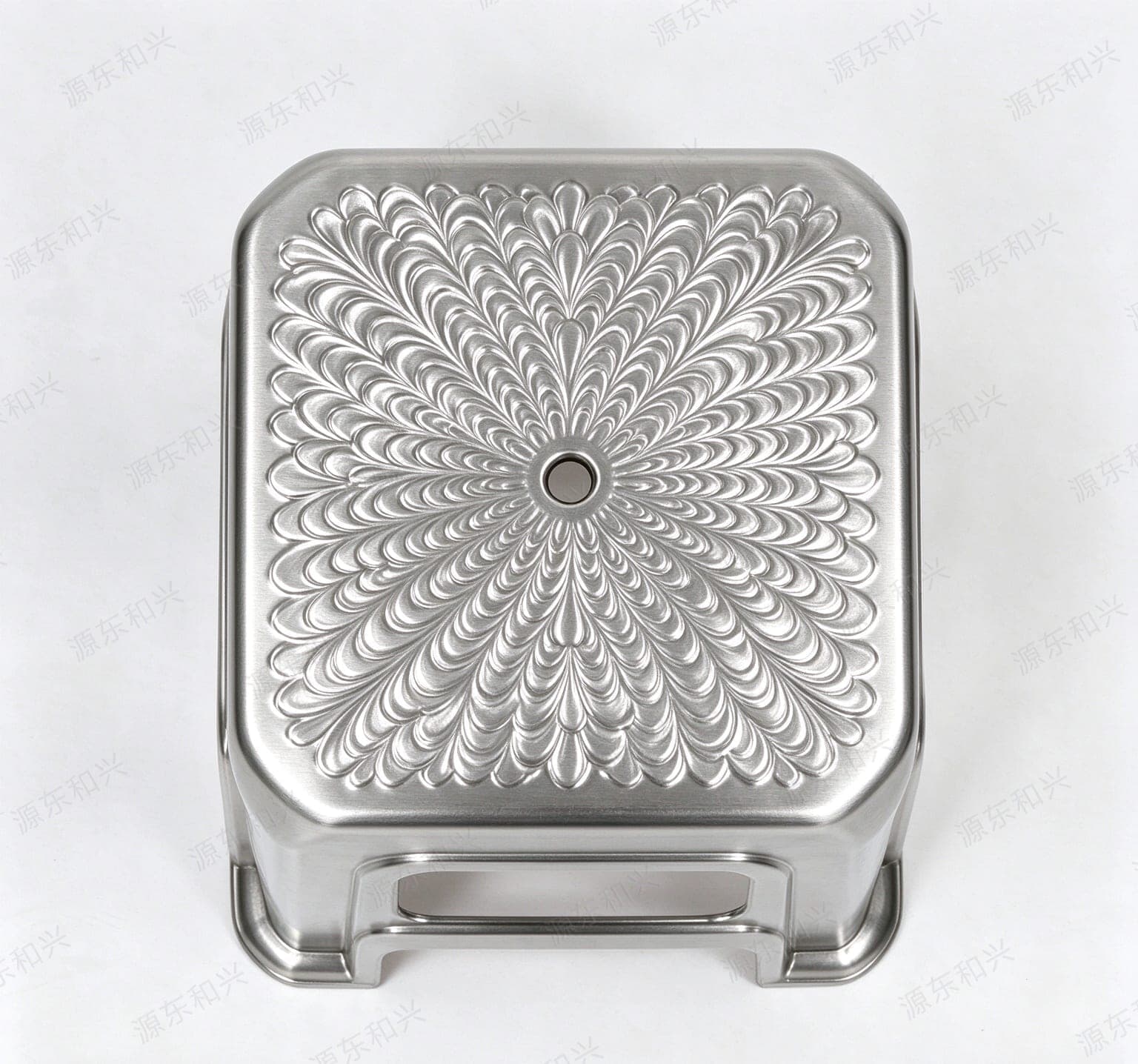
| Orange-peel and radiating blossom | AI examples; no existing tooling implied | Only that one seat face can take many patterns |
| The dimension numbers on the renders | Invented by the model | Meaningless; our dimensions come from drawings |
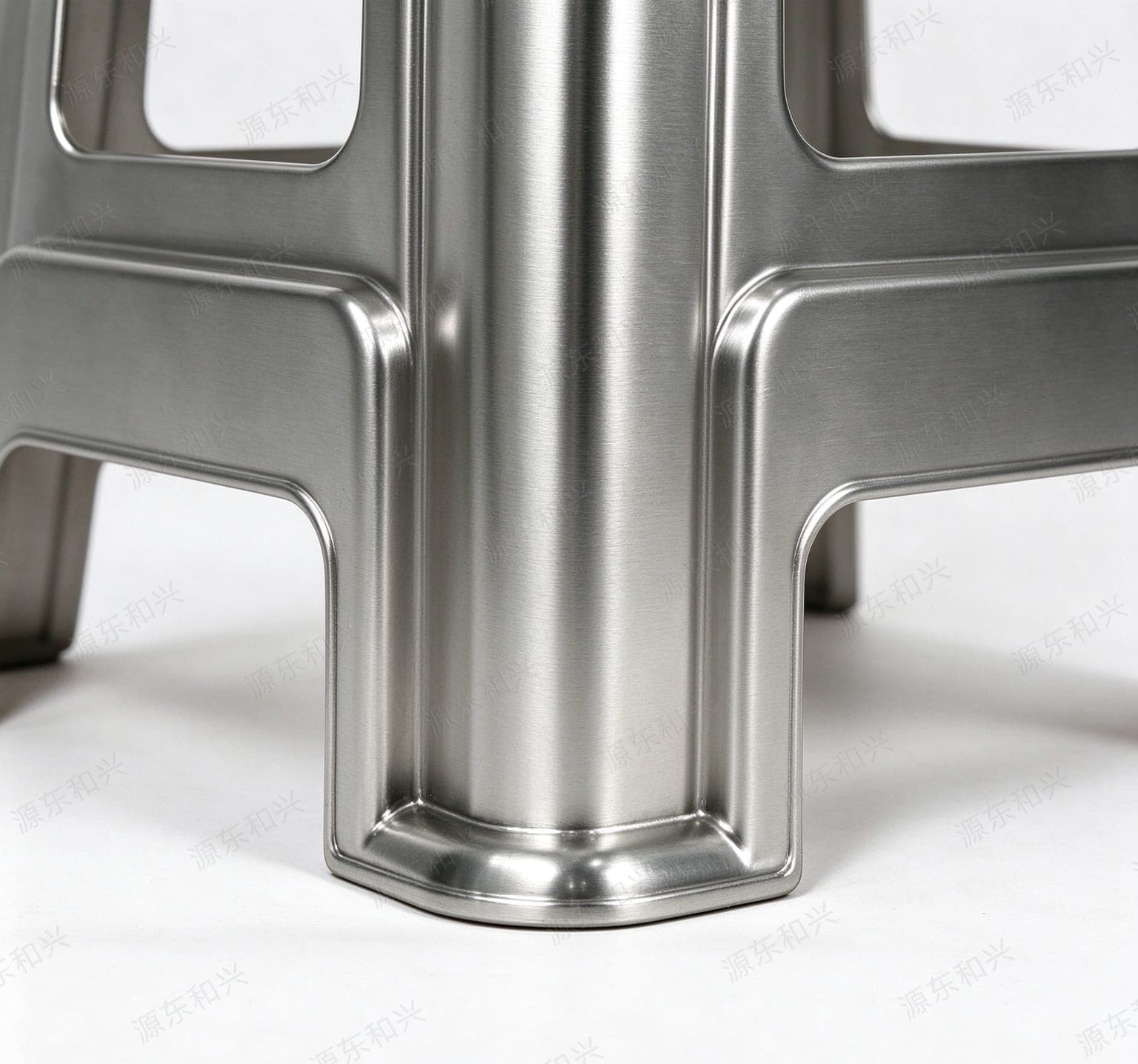
| Legs and the base structure | AI concept render | How the idea intends to stand — not a structural calculation |
Embossing is not only decoration
Embossing begins as function: things do not slide off, water marks and fine scratches show up less, and the raised grid acts as integral stiffeners, so the same sheet behaves differently once it is profiled. That is routine sheet-metal practice, not a conclusion about this stool.
The remaining patterns — orange peel, which is a frosted grain, grid, herringbone, fish scale and radiating blossom — are AI examples showing how many faces one seat can take; they do not imply that the tooling exists. Two of them appear here; the rest are not pasted in one by one.
The process steps are the usual ones
If this went further it would run through the usual steps: coil slitting, embossing, bend forming, welding, then grinding and brushed finishing. Those are daily work here and need no restatement for the sake of a stool.
It does not have to be a stool. If you have stainless parts to emboss or to form, or a sample to build to drawing, send the drawing or a site photograph and we answer on tooling feasibility and batch size.
Questions this invites
Have you actually built this stainless steel stool?
No. The stool renders are AI-generated — we have neither built nor supplied one. Only the embossing is real, and the evidence is the workshop photograph of the embossed panel.
Can the dimensions printed on the renders be used?
No. Those numbers were invented by the model and are not our specification. Ours come from drawings: send a drawing if you have one, otherwise send length, width and height, or a site photograph.
Is there existing tooling for all these patterns?
Only three are pressed today: four-prong blossom, honeycomb and bead. Orange peel, grid, herringbone, fish scale and radiating blossom are AI examples and imply no existing tooling. Whether new tooling is needed depends on the pattern shape and the batch, and can only be said after assessment.
Do AI renders count as evidence of your delivery?
No, and this article does not claim to. The site keeps a separate section of delivery records where every image is an on-site photograph, including shared-frame shots that place our parts at that location. This article states one thing only: the embossing is real, the rest is an idea.
What grade and thickness would this stool use?
Neither exists yet: the stool has not been built, so there is no grade or thickness to state, and this article will not invent one. For comparable work you describe the service environment, whether the part is exposed or load-bearing, and the batch, and the engineer picks grade and thickness from that — the rule is already written up in the article on choosing a grade.
To take this idea further, three things come first
Whether this stool deserves to be built comes down to three things: where it would be used, how large the batch is, and which surface pattern you want. Settling those is more useful than arguing how many generations it would last.
This article is only an idea. For work actually delivered, see the 100-plus bollards at Shunde Fisherman’s Wharf, where every image is an on-site photograph; capability and stock sizes are under Products and Services, and weight calculation lets you work out plate thickness yourself. Send drawings or site photographs through Contact to settle the three questions above.
Other articles in this section
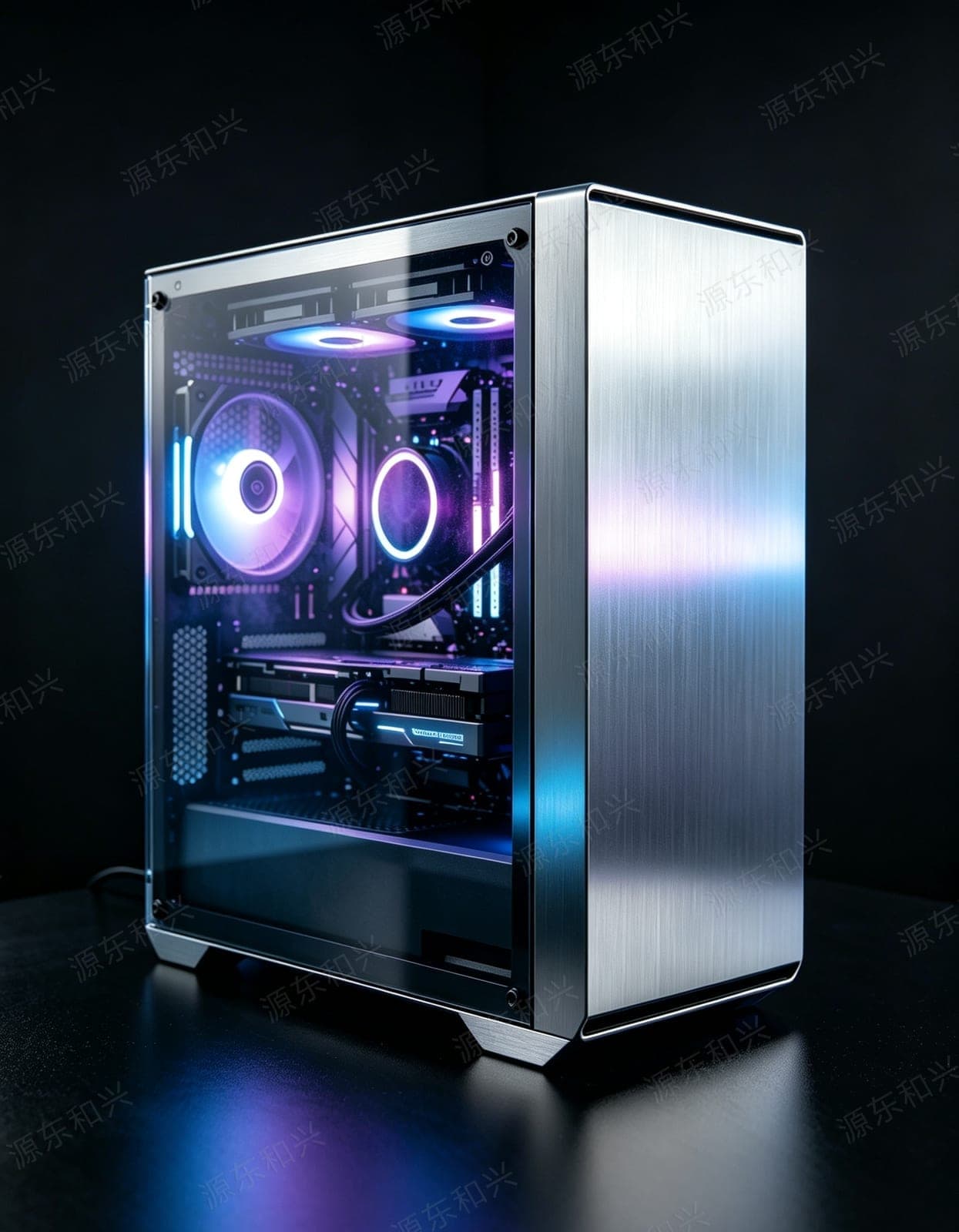
What If a PC Case Were Stainless? A Materials Ledger Started by a Concept Image
GTA6 on PC keeps being rumoured and flagship GPUs keep running hotter, so builders are thinking about cases again. We produced two brushed-stainless concept images as a lead-in — stated plainly: concept images, not real products; we never built this case. This article is the materials ledger: look, rust, weight, cost, fingerprints — and which shop processes a real one would go through.
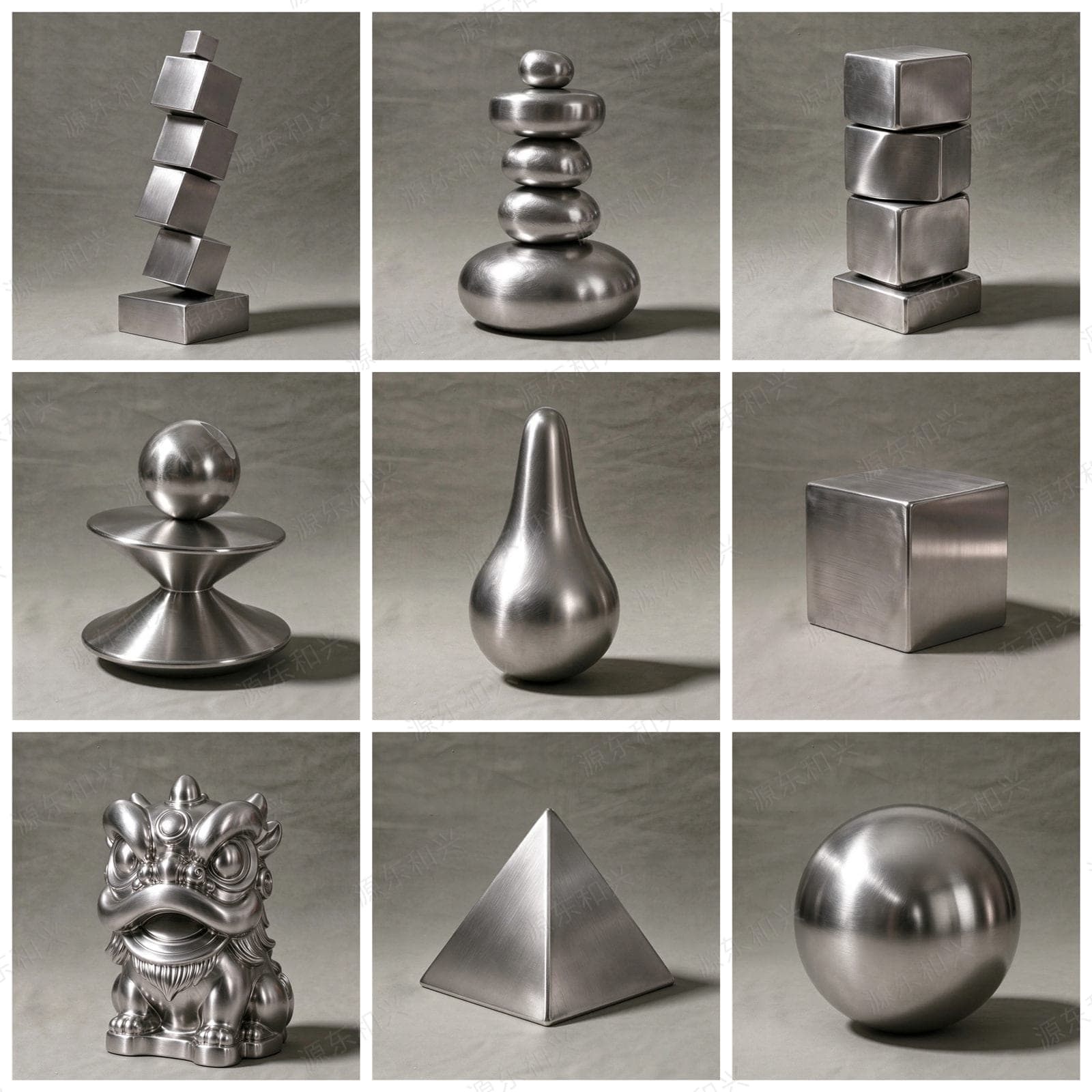
The Stainless Geometry Series: The Shapes First, Then How They Get Made
A set of stainless geometry designs: stacked blocks, rings, free-form curves and a figurative piece, nine tiled into the cover. The designs are the opener — whether they can be built is answered by a real workshop photo. Desk ornaments, installations, custom gifts: send the idea over.